19 December 2006

The New New: video art in the 21st century

Shaun Wilson
presented at Vital Signs (conference)
Australian Centre for the Moving Image, Melbourne 07.09.2005
EISBN:
1 9211 6611 8

What is new about video art in the twenty-first century? This question underpins my enquiry into the new approaches and modes of practice that have changed both the ways in which recent video art has experienced a hybridisation of other influences– such as the music video clip, the computer game, and cinema — and to how this is positioned through Media Arts and elsewhere.

The logic that binds this enquiry is based on a foundation of themes that, when combined, gives rise to a consolidation of positions. If you asked a new media theorist, it may be in terms of shifting ideas and theoretical historicity or, if you asked a video artist, this may be in terms of pictorial and technological issues. From these perspectives, the key points of ideas, history, and images are central to not only understanding how video art has changed but also in terms of grasping how artists have articulated the world around them through popular culture, the socio-political, and self representational.

These issues characterise the nature of new video art: a visual language that is historically experimental, conceptually referential, instantaneous, and digitally umbilical. Yet video art is no longer an experimental medium nor is it the poor cousin of cinema; it has, over time, become an established part of the visual and media arts with its own tradition and genre-based ancestry. ‘The once new technology of video has now taken its place beside other, more computer-driven media.’

Moreover, video historians such as Michael Rush, who, in Video Art, believe that the medium is shifting from its understood position to something else, something new and historically untested. He states:
‘…video art is no longer what it was before the digital age…video technology is now in a hybrid stage, combining all manner of digital technologies in the creation of what is likely to be a new medium.’(Rush, 210)
Overtaken by new media, one might consider that the position of video art is now in a hybrid state shadowed by on-line, virtual and immersive technologies that are, in any case, experimental. Given this, throughout my essay I will refer to video art as: first, an analogue and digital time-based medium which is informed by global shifts, history, and the language of cinema; second, the result of a generational movement of artists who began to experiment with video technology in the mid 1960s so as to find a new representational value through abstract, performance, spatial and non-narrative driven images and thus developing through the poetic, the political, and the self-referential to become an established inter-disciplinary medium; third, an artform that compliments new media; and forth, an artform positioned as either a reflection of, or makes reference to, the wider cultural and socio-political spectrums, and to that of an introspective, often poetic expression relating to, yet not exclusively governed by, identity, memory, and self.

Locating these perspectives across the wider base of new media technologies is found in, and incorporated through, mainstream interactive devices: mobile phones, the internet, computer games, CD-ROMS and DVD-ROMs, interface displays and menus, virtual reality, immersive environments, and digital television. Yet, the artform itself is still primarily distanced from new media simply because it is, and most probably never will be, interactive. As soon as an interactive component is introduced to video, it ceases to be video art and becomes a type of interactive display, which obviously uses video art as part of its logic. Instead, video has become, as later discussed, a part of moving image heritage; ‘it is time for video to assume its place as simply a ‘filmic’ medium’ and with this, hybrid cinema.

This idea is common to Lev Manovich who argues that ‘new media is interactive, in contrast to old media where the order of presentation is fixed.’ (Manovich, 55) From this perspective, I associate video art as being a part of new media, but as an external and outside source available to, and used in conjunction with, interactivity; a stand alone medium. To assume that it is part of the interactive field simply because its current practice is digitally based is to deny not only the interactive nature of new media but also the relationship video art has with cinema and film. When considering these factors, the quest to find what is new about video art is further governed by the affect of current perceptions regarding time-based mediums: the public versus the institution, and as later discussed, production and technology.

Regarding this, screen-based communities, such as Generation X and beyond, are clearly becoming narrative centric given the type of media with which they are continually — daily — bombarded with: the fast paced nature of the music video clip, the Internet, the action game, and the 30-second trailer. In somewhat opposition to this is the institution which appears to be more focused in recent years on the continuation of non-narrative representations; often slower or more contemplative, thus created and resolved through academic enquiry partially attributed to the increase of, and greater experimentation made through, non-narrative artworks. Steve Thomas in his essay Cinema for Thinkers describes these as ‘thesis films’ — artworks and hybrid film practice developed through research and also through exegesis in Masters and production PhD degrees made popular in the last ten years at university Fine Arts and Media departments worldwide. These current bi-polar environments give us an idea as to the differences between twentieth century and twenty-first century video art in terms of both popular and institutional practice: poetic and contemplative / fast moving and narrative centric.

An of example of the later is found in Brendan Lee’s Extreme Filmic Challenges series (2005) where the artist locates his own recollections of Australian film: Mad Max (1979) and Romper Stomper (1992), and also of fan boy genres, which are then pieced together with a fusion of ‘the problems faced in cinematic narrative’ and aesthetic reconfiguration. The undercurrent in this particular series of work is the Australian car culture pastiche, located throughout much of the types of subjects that Lee makes reference, and to how the American influence on Australian car culture, and that of cinema, is prevalent in production today.

While Lee involves the past as his own experiences are mapped together with filmic references, the artist achieves this through his subjects — violence, anxiety and seduction — which are never still. There is always a sense of movement, carrying the viewer from one shot to the next, always progressing forward and jumping through motion. His quick moving editing technique is not unlike the fast pace nature of video games, such as Tomb Raider and Doom 3. In fact, the comparisons between the aesthetic logic that navigates these kinds of games and Lee’s video art are closely tied in together, as both items provide visual clues to spatial and narrational surroundings; it is up to the viewer to participate and move through these kinds of spaces to reach an understanding, an end game, to the story and that of the artwork as a whole.

Qualities such as these are emulated in specific moments of Lee’s revisualisations, and also directly from source films chosen to support his mnemonic narratives. These are, on the one hand, beautiful while on the other hand, sociologically disturbing, as found in Shooting from the Hip (2004) as the viewer is presented with a sequence of re-enacted shoot ‘em up footage paralleling not only genre cinema but also B-grade television such as Bonanza and The Soprano’s.

In this artwork, Lee’s gangster cum action hero fires multiple rounds of ammunition from dual pistols, combined with the filmic taboo of multiple cross dissolves and the resonating of cartoon-like yet somehow cathartic and rhythmic choreography. We witness debris ricocheting around Lee’s office film set while at the same time prompting the viewer into cinematic memories of their own — bar fights in the spaghetti western, the grand finale of a gangster film or even Deckard shooting Pris through glass frontages. Our own memories of cinema are brought to Lee’s artwork which communicate to us like a story teller on speed, narrating action packed schizophrenic sequences; double layered dialogues which establish an interrelationship between what Lee brings to the subject from his own memories only to be then reconfigure with our own, and to the broader implications of cultural histories attached to, and generated from, the types of films which he uses as departure points.

A fundamental aspect of his work is the nature of its enquiry — Lee questions his subject yet never provides an answer. ‘My artwork raises questions about narratives in film but doesn’t answer them directly”, says Lee, “that’s up to the audience.” Although this method contains the tell tale signs of new directions for video art it is through other influences, such as the music video clip, where other artists, such as Kati Rule and Tony Schwensen, employs similar visual devices to translate a deconstruction of narrative and that of a filmic historicity.

Nicholas Chambers, in his essay ‘Pictures Came and Broke Your Heart’, in Video Hits: Music Video and Art describes Rule and Schwensen as:
‘Mim[ing] their memory of videos from the 1980s and bring the spectacle of the hit video down home. Through memory and place they interrogate the space between the spectacular world of the video and their own lived experience.’(Chambers, 45)
I use this reference in relation to Lee’s work, for there is little difference between the conceptual framework of their art. Like Rule and Schwensen, he concentrates on revisualising memories, which can be at times a powerful dissection between recollection and identity both in regards to visual language and cinematic presence.

Moreover, until recently, the ways in which these artists use video and memory, and also narrative and identity, in their creative processes is not unlike the principles that visually establish music video clips as a kind of nexus between commercial film and video art.

Even though the music video clip remained for many years outside the Media Arts arena, experimental video practice was a major contributing factor to not only the birth of music video clips in general but also that of the iconic launch vehicle for the medium — MTV. In a contemporary sense, many artists who have grown up with MTV styled media have now returned to its base and brought their childhood and teenage memories with them.

The King Pins revive such nostalgia with their crude yet intricately choreographed artworks that are one part critique and one part just downright fun. They ‘are a group of flour close-knit female collaborators who began working together in 2000’ who, in Welcome to the Jingle (2004), play out fast moving edits and music video clip-centric camera angles through satirical ‘mockumentary’ styled reconfigurations of popular music from the1980s and early 1990s. Their participation in the 2004 Sydney Biennial was described as:
‘Dressed as athletes, they traverse the urban geography of Sydney using Starbucks cafés as a recurrent reference point, a franchise The Kingpins see as a parody of the European style café. Welcome to the Jingle speaks of colonisation of the city, through franchised and homogenised chains of fast-food culture, masquerading as sophisticated networked meeting houses.’
Through the ‘fun’ aspect of their work, a deeper side lurks — sociological commentary drawn from the peppering of popular culture, multi-national iconography and relationships between the way we interact with fantasy; secretly negotiating rhythmic dance moves in front of a television through voyeuristic rituals that no one else can see.

Other critique suggest that:
‘The Kingpins draw the relationship between Drag and the Australian urban landscape. In the format of a music video, they formulate fictional, non - linear narratives within their local neighbourhoods of inner-city Sydney. Both This is my Remix Baby and Mens Club plays with the relationship of the body within spatial perimeters, the marking and ownership of territory and the visibility of gender within architecture. In placing these 'foreign' bodies within a local landscape, Australia is exposed as sufferer of the cultural cringe and it's society a pastiche of influences. Mimicking mono-American culture, pseudo European cosmopolitanism, whilst strongly emulating Asia, Australia is a reflection of cheap imitations. The Kingpins are themselves cheap imitators, simulating pop icons and pillaging media stereotypes, giving birth to their own reinventions.’ (Primavera)
While their work is undeniably theatrical, when considering narrative, there is less of an involvement of critiquing their source material and more in the way of how we interact with video clips. By using video as a medium to convey such stories – the shake of the head, the flick of the hair, the gyration of the hips — one might consider video art ion this instance as becoming less about the subject and more about the relationship with the viewer. This is undeniably so when viewing Welcome to the Jingle and others works because the viewer is witnessing a reconfigurational mish-mash of music video clips that may be remembered in some degree of clarity. When I view this work, for example, I am taken back to memories of dancing in my parents living room passionately executing air guitar solo performances to the music of Bon Jovi and Guns and Roses. The vulnerability in such memories is the notion of getting caught in a moment of private spectacle and this translates to the artwork

So how is this new? In sum, music clips are best appreciated with a sense of history and most certainly when we have something to compare it with, as found in the work of the King Pins. When music clips were first becoming popular in the early to mid 1980s they were new. Now, twenty years plus later, they carry a distinct separation between now and then, and, of course, for children who grew up with MTV, we are now adults looking back at our teen years through nostalgia. Therefore, the music video clip genre is now generational and a sense of history is visually malleable; a factor that was not as powerful even ten years ago as it is now.

This is undoubtedly one recent influence on video art that is mirrored by its roots in popular culture and that of television: throughout its forty-year history, video art has often parallelled media content found in mainstream popular culture, including film and television, which in turn has influenced both areas, as found in TVTV’s affect on interviewing techniques of live news reporting, and Nam June Paik’s affect on the aesthetic of motion graphics used in MTV and beyond.

Another example of recent video art is located in the work of Chris Cunningham, who takes the medium and blurs the boundaries between where music video clips stop and video art starts. The climatic All is Full of Love (1999), which Cunningham himself calls a 'kama sutra meets industrial robotics', marks a division in the production of video art. Although the work was produced as a music clip for Bjork with a song by the same title, it was embraced in the years after by institutions and artists alike, in combination with other artworks of a similar vein that employed both the same technologies and editing/cinematographic styles.

The artists web site describes All is Full of Love as revealing ‘a landscape in which the cold beauty of technology melds sexually and sensuously with the organic world.’ Here see two human-like robots choreographed with other machinery, in a sensuous and seemingly erotic embrace. Cunningham states:
‘As a teenager I had quite an obsession with industrial robotics and electronic music. I always thought it would be nice to mix that aesthetic of robotic fetishism with something completely conflicting. All Is Full of Love is so much about romance and sexuality that I thought it might be interesting to push those ideas together with a sort of cold technology, and see if we could make it work...’ (Cunningham)
These qualities — sensuality and emotion — are further developed in other works that travel through darker passages and into the realms of the grotesque. Rubber Johnnie (2002) is a psychological butchers shop of cinematic dance theatre: Frankenstein meets ET, Hitchcock meets a techno Blair Witch Project, which display fast paced editing, quick pans complimented with unrecognisable CGI and further enhancement.

In this work, a night vision video sequence of a disabled naked mutant human with a super-sized head blurts out the words ‘mama’ amongst convulsions of paranoia before dancing in a wheel chair to the Aphex Twins track titled AFX237V7. In complete contrast to his earlier All is Full of Love, this grotesque and utterly disturbing artwork takes Cunningham deeper into a self-created nexus that rests in between video art and music clips, only to return with a consolidated platform that makes distinction between commercial product and artwork. It is because of his narrativity juncture, as found in Rubber Jonnie that the artwork is, arguably, part of video art and, moreover, film. What is striking about this factor is the combination between the fast past, blink of an eye editing, and the slow paced, abstracted movement, which seems to combine an oddity with both computer game action and the institution’s non-narrative contemplativeness.

Like Flex, as ‘shown as part of Apocalypse: Beauty and Horror in Contemporary Art at the Royal Academy of Art in 2000’ (website, Cunningham) Cunningham takes video art in new directions, using industry standard software including compositing and CGI complimented with an array of high end video and film cameras. If it were not for the digital revolution, his work, and others, might not be reliant on visual effects to the level with which we see today.

Moreover, since the mid 1990s, digital technologies have become increasingly popular, and in recent years necessary, for the video artist thanks to a ‘revolution’ which redefined production, postproduction and distribution media. Partly responsible for spearheading this shift was Apple computers. When ‘iMovie’ was released in 1998, it became one of the first widely available digital softwares to simply and effectively bring about a basic, yet comprehensive editing suite into the homes of both artists and the amateur filmmaker. With this came rapid changes that affected video art given that now everyone can film and edit their artworks with relatively little expense and expertise. At this point, things changed and so did the type of artwork made by artists. Within 5 years, the VHS tape was out and the DVD was in. Suddenly, video makers found themselves capable of producing, at a price, Hollywood standard effects compiled on High Definition video that mimicked the look of film. Further enhancements by applications such as Premier and Final Cut Pro provided complicated edits and processing, thus more resolved postproduction without the need for in-camera or reel-to-reel editing.

As technology advanced, a generation who never knew life without the internet emerged, and from here, a different expectation of the quick flashing, narrative screen-based genres emerged that has ultimately impacted on art schools training video artists as well as the availability of digital video technologies.

Yet has this changed video art lost the qualities found in pre-millennial artworks? No. The lyrical narratives are still with us, found in the works of Lorna Simpson and Mary Lucier, the poetic is still located in the works of Viola and Grahame Weinbren just as the political is still with us thanks to artists such as Tracey Moffatt and Shirin Neshat.

However, through the recent contributions of Brendan Lee, The King Pins, and Chris Cunningham, we see new pathways emerging for video art, representative of cultural factors, societal changes, and the advancements in cinema and technology.

By these examples and others it can be recognised that new video art practice is understood as being; first, a distinction between both the narrative driven, fast paced action of current new media-based mediums and contemplative non-narrative approaches; second, more advanced aesthetics and effects can now be attained thanks to the advancement of the digital revolution; third, the questioning of narrativity through cinema; and forth, the integration of history as theme through critiquing music video clips while at the same time articulating memory as a mode of understanding and coming to terms with this history, and that of personal identity.

Where this leaves video art is at a crossroads intersected by cinema and interactivity. More filmic than interactive, video art will continue its forty-year history with new ideas and evolving practices. The new new has begun.

References

Michael Rush, Video Art, Thames and Hudson, London, 2003
Michale Rush, New Media in Late 20th-Century Art, Thames and Hudson, London, 1999.
Lev Manovich, The Language of New Media, MIT Press, Cambridge, Mass., 2001.
Steve Thomas, ‘Cinema for Thinkers’, Broadsheet, Open City Inc, Sydney, August/September 2005, No.68, p.19.
Nicholas Chambers, ‘Pictures Came and Broke Your Heart’, in Video Hits: Art and Music Videos, Queensland Art Gallery, 2004.
Kathryn Weir, ‘Jump Cut: Music Video Aesthetics’, in Video Hits: Art and Music Videos, Queensland Art Gallery, 2004.
Christian Metz, ‘The Fictional Film and Its Spectator: A Metapsychological Study’, in Apparatus, ed. Theresa Hak Kyung Cha, Tanam Press, New York, 1980.
Primavera website, ,http://www.mca.com.au/modules/primavera03/> (accessed 29th July, 2005).
Chris Cunningham website
(accessed 29th July, 2005).

Remixing Memory: the Copied Image in Australian Photography

Shaun Wilson
Photofile
No. 77, Autumn 2006, pp. 35-37

The imbeddedness of memory in the copied image is a theme well explored throughout Australian photography. Recent examples have yielded a reinvented context – the memory of an original image repositioned through a second-handed facsimile. The idea, of course, is to bring this copy to something else which, in turn, becomes a third image; an archive of collected images catalogued through a process to what media theorist Lev Manovich claims as ‘a cultural remix.’

Evidence of this is found in the Duraclear prints of Lyndell Brown and Charles Green. The Map of Atlantis (2005) reconstitutes several key images – ‘a NASA Space Shuttle mission, Johnny Depp as William Blake in Jim Jarmusch’s Dead Man, Redfern Max the Elder with India Pirrie, Harmony Day, 2004, and Robert Smithson breaking plate glass for Map of Atlantis’ – through assemblage as painting reproduced as photography. What is striking about this artwork is not a developed pictorial aesthetic but rather the process of layered images as if some kind of mnemonic montage under strain.

The Map of Atlantis explores a central idea that address how images change when copied, and from this, how the ‘memory’ of the first image is ever present in its successive copies
Like the American scholar Robert Smithson, who wrote that memories trapped the future as if they were buried under the pressure of multiple sheets of glass' , Brown and Green approach image making as a means of coming to terms with how their artworks use the archived image as a mode of articulating memory, art and the archive. Yet it is the method of this process rather than identification of the archival, which seems to have the greatest presence, a wider state of play within the Map of Atlantic and other works. Here, ‘remixing’ becomes the process and memories turn into the ‘by-product’ of remixing.

Of greater concern is what happens to an image after remixing. Does it loose its value and become a watered-down hybrid or is nothing lost and everything gained? The Map of Atlantis provides some clues. If the premise behind this artwork is centred on the process of memory as a generational copy and how the image withstands such reinvention — both in terms of aesthetics and context — then the viewer only has to look at how the embedded image of Johnny Depp within the picture looses its original value – a film still anchored to the motion picture Dead Man (2001). Yet by placing this film still into a grouping of other images and the context changes: a memory of an image placed in context to foreign agents which renders the first image under pressure; it has ceased to be a film still and is now a cultural facsimile.

Furthermore, the image experiences another kind of stress: are we looking at a photograph of a painting or is it a photograph made from a painting? Either way, both artists’ deconstruct the process of photography, which then reconstructs itself through the memory of a painting - the photograph of a painting of a photograph.

The same process occurs in the recent work of Aaron Seeto. His mammoth undertaking of One Thousand Other Things congeals the artists ‘interest in the ways in which the memories and stories found within photographic images and archives alter and change with their retelling.’ By the methods used to create his artworks, Seeto comes to terms with his own ancestry from using photocopies, as opposed to painting used by Brown and Green, as a means of establishing images– from photograph to photocopy to photograph.

The artworks exist as hand manipulated silver photographic prints on prepared duck eggs described by the artist as part of a wider investigation into ‘the ways photographs and their meanings continually alter and transform through the degeneration (oxidation) of its silver chemistry, and how they provide us with both poetic possibility as well as political imperative.’

Here, the viewer witnesses the third image through multiple family portraits from Seeto’s family archive of relatives migrating from China to Australia in the early 1900s. This also plays with how we ‘collect’ the past and the interpretations with which we understand it.

Although the artist’s priority of process-over-product focuses attention on how the image was made, the double layered photographs found in One Thousand Other Things appear to be grounded in issues that focus on collecting the past through the photographic image and then, after remixing, coming to terms with a past – not the past but a version of history as we know it.

The methods used by Seeto to creating such a picture, itself steeped in historical references of a by-gone practice, says much of our preoccupation with the past, and of identity: mapping the past onto objects etched with the memory of the original portraits.

Seeto further establishes a context of history in the translation of his images not unlike the artwork of Alan Cruickshank. Works in his series Moco Polo or Museum of the Colonial Post Colonial (1997-2001) ‘are based on J.W Lindt’s photo album of Australian Aboriginals [Koori], created in the 1870s.’

In replacing the faces of Koori people with those found in ‘famous historical photographs – of a construction worker, or the Sydney Harbour Bridge, or of First World War Aviators’, as described by Phillip Jones (Curator, Museum of South Australia) as ‘cut and pasted identities and facts’ , Cruickshank establishes a moral dilemma in this resultant third image. Although it is blatantly obvious that there are two variants of each image, the viewer is confronted by a two-folded oddity: first, the absurd brutality of colonialism in nineteenth century photography versus the historical remix of post colonialism and; second, the memory of the original figures morphed into someone else, a third person.

In an untitled work from the Moco Polo series, father and son pose for the camera presiding over the apparent hunt of a kangaroo. In Lindt’s original image, complete with a Boomerang positioned in the sprawled paws of the kangaroo carcase, two Koori figures are placed in a constructed theatre-like set exemplifying this sinister genre which portrayed indigenous people as sideshow exhibits. The defeated figures stand morphed into position, which, through Cruickshank’s third image, reverses the conquered with superimposed faces of the conquerors. The viewer is left with no other choice than to revisit Lindt’s original photograph with questions of accountability, and most importantly, issues of white guilt.

Brendan Lee also plays with memories in Anthology, which continues the deconstruction of the first image by reinventing his memories of Australian New Wave films, namely the Mad Max trilogy, as the third image. Based on an investigation into Australian cultural identities, Lee brings to the viewer an archetypal Australian outlaw pointing his double barrel pistol directly at the camera. On first read, one might be mistaken for assuming a connection to the Tarentino-esq filmic genre: Pulp Fiction, Kill Bill, Lock, Stock and Two Smoking Barrels. However, on closer inspection, the artist’s reinvention of the Australian filmic badlands reveals an interception between the Mad Max trilogy and the artist’s memories of these films.

While it is clear that Lee is not re-appropriating a first image directly through a second and third generation, he is, rather, reinventing a memory of the Mad Max genre through a theatrical-base. Anthology prompts our own recollections of the film and of the Australian outlaw thematic that we bring to the image, from the embedded narrative to the restaged context. The third image becomes our own imagined pictorialisation remixed from what we see in Lee’s artwork and from our filmic memories that give rise from the subject.

The clever part about Anthology is closely linked to the artist’s awareness of cultural identity through the language of cinema and its relationship with the third image. By presenting an iconic gun-slinging character the viewer is immediately forced to access their mental database of related images committed to memory, which are, in turn, interconnected with cultural identities.

So, can it be that this merger of memory and identity through the remixed image is central to not only Lee’s work but also to a wider collective of artists including those already discussed? Maybe, but if there is such a merger between these factors, of authorship and originality/ first image and third image, memory and the imbeddedness of memory, it must be delivered in context beyond the Postmodern and reconfigured back to the survival of the image itself. In the age of remix, when original images are themselves under threat from a co-authored and pre-existing ancestry, artists are exploiting these issues in Australian photography through visual enquiry that creates not only a surface tension between the surviving image but of the on-going relationship between memory and art.

References
[1] See Lev Manovich,
The Language of New Media, (Cambridge, Mass: The MIT Press, 2001).
[2] ibid., artist notes for
The Map of Atlantic (2005).
[3] ibid. See (Robert Smithson “The Shape of the Future and Memory” (1966), in Robert Smithson,
[4] Robert Smithson: The Collected Writings, ed. Jack Flam (Berkeley and Los Angeles: University of CaliforniaPress, 1996), 332.
[5] Aaron Seeto, artist notes (2005)
[6] ibid.
[7]
Museum of the Colonial Post Colonial: Alan Cruickshank, exhibition catalogue with essay by Lee Weng Choy,(Singapore: The Substation, 2003), 5.
[8] Ibid., 7
[9] Ibid.

Australian Gothic: video art now


Tammy Honey, still form Threesome (2006), HDV as single channel DVD, colour, sound, 5 mins.

Curated by Shaun Wilson
Project Space/Spare Room, Melbourne: 05.02.2007 - 28.08.2007
The Directors Lounge, Berlin: 08.02.2007 - 18.02.2007

Perth Institute of Contemporary Art, Perth: 12.07.2007 - 03.08.2007

Brie Trenerry, Brendan Lee, Marsha Berry, Tammy Honey, Larissa Hjorth, Alex Avtzoglou, Robert Hecimovic, Shaun Wilson

A selection of emerging and established Australian video artists presenting work that explores the idea of a 'gothic mode'. Further touring dates will be announced soon. This exhibition is presented by the Digital Cinema Research Group at RMIT University.
Hearts of Darkness in the Australian Gothic

In his essay ‘Australian Gothic’, Gerry Turcotte frames the idea that ‘long before the fact of Australia was ever confirmed by explorers and cartographers it had already been imagined as a grotesque space, a landed peopled by monsters. …it was for all intents and purposes, Gothic par excellence, the dungeon of the world. (Turcotte, 10) As he further establishes that a ‘Gothic mode’ existed in Australian literature from the comparative observations of a European settlement at odds with a strange and hostile environment, the continuation of this ‘mode’ is not unlike the current thread running through Australian video art as evidenced in the exhibition Australian Gothic.

Underpinning this mode is not entirely an easy matter. The historic term ‘gothic’ is, in itself, a direct translation meaning ‘bad German style’ coined by Renaissance scholars as an insult commonly used to describe medieval architecture and the decorative arts from the eleventh century onwards. And lets not forget the contemporary evolution of goth subculture from the late twentieth century loosely based on modern adaptations of Neoromanticism: these all play out a significant roll in contemporary art but to inform a gothic mode through video art requires a different understanding that has more to do with Goya than it does with Anne Rice or The Sisters of Mercy.

In Two Birds with One Stone (2006), Brendan Lee gives us a taste for this role by dissecting aspects ofAustralian 'badlands' cinema where he reinvents a prison meeting room. 'Filmed in a menacing blue hue, two prison inmates by the name of Scumnuts and Pigkiller, speak in aggressive tones, their actions embellished by a vibrating projection screen which 'assaults' the viewer. Created in the Australian prison genre, Lee takes his inspiration from movies such as Stir, Ghost ofthe Civil Dead and Chopper. He considers the language of film, why we are no longer shocked by violence and how easily we can be seduced by imagery.' (Bullock, 2006).

Originally exhibited at the Art Gallery of New South Wales in 2006, Two Birds with One Stone positions itself to what Roger Ebert asks: ‘is everybody in Australia a few degrees from true north? (Ebert, 2001) The unsettling nature of Lee’s video work draws close proximity to Australian national cinema yet the oddity found within the subject is that these recreations invite the viewer to articulate these themes through an uneasy and at times, abusive framework. The dark, noir-like scenes seduce the viewer with its Caravaggio-like thespian compositions until the violent dialogue between Scum nuts and Pig Killer takes hold of a darker level where the viewer is ultimately confronted and challenged with Lee’s attention to disturbance.

As with his earlier works that employ similar conceptual tactics, such as the video installation Role Model (2005), Two Birds with One Stone establishes visual strategies not unlike the seductive and stoic barbaric-ness of Goya’s Coloso (1810-12). Both works, which share similar lighting and tonal values, convey a quintessential gothic mode in that the implicit nature of violence looms within the suggestion of barbaric overtones – it is the alluring to what has just happened or what might occur that holds a central power over the viewer.

The same sort of dark imagery lurks in Alex Avtzoglou’s One Two Red Blue (2006). The surreal and grotesque nature of Avtzoglou’s video work draws personal influence from experimental silent film such as Georges Melies Le Voyage dans la Lune (1902) and circus-themed cinema/theatre. This often psychologically disturbing ménage of noir-like images taps into a stream of picto-historic references stretching from Surrealist film to Stan Brakhage that follow the exploits of two female circus performers. Interlaced within this narrative is a performative sequence by which one such character seductively strokes and fondles a large dead octopus to then massage the creature into her face and through her long draped hair.

This particular work is surprisingly sumptuous in colour and light that brings about the same kind of barbaric seduction that Lee generates in Two Birds with One Stone. The viewer cannot help but consider Avtzoglou’s clever positioning of aesthetics as a pleasing and somewhat comforting assurance that such delicate images provoke a disturbing undercurrent hiding beneath the artist’s bag of cephalopodan tricks.

Just as author Hans Belting argues that video art ‘attracts the attention of the public with the help of a kind of mirror’ (Belting, 87), One Two Red Blue acts as a mirror of the grotesque to temporarily lull its audience into a false sense of visual harmony as the jump cuts steer away from the octopus sequence and back into the childlike actions of our two circus performers; hiding in boxes and twirling Hula Hoops. Yet we are left pondering to the fact are we watching a surreal dream or is this experience through the waking hours? The dreamlike mirror of the gothic mode certainly has as much to do in Avtzoglou’s work as it does with Robert Hughes’s own account of being hospitalised after his near-death car accident by which he laments that in his dreams ‘time [was] wholly lost in their maze’. (Hughes, 9) And this is exactly what One Two Red Blue subscribes, to become lost in a series of moments where time no longer exists; only the surreal notion of a strange and repulsive desire lurks beneath a gentrified image dislocated through the logic of uncertainty.

Tammy Honey’s Threesome (2006) constructs a different type of desire through a similar kind of ‘mirror’. Based on her long-term investigation into the merger between the quest for fame through pop music and the visual nature of MP3 advertising, Honey brings to life three versions of herself in the one frame singing along to a headphones track with a nail biting, tone-deaf performance. It is hard to decide whether Threesome is a music video clip or a video clip about music. Either way it provokes a deeper level of examination into the reasons why some obsess with the desire for fame through pop music as evidenced in reality-television programs such as Australian Idol, and Pop Star. Moreover, like the CD Karaoke: So You Wanna be a Pop Star Vol. 1-3 (2003), Honey brings to our attention through these pop desires that an uneasy tension is created by these noted dissatisfactions of the every day life by dreams and delusions of chart-climbing fame and fortune.

Further, Honey carefully involves the idea of ridicule. Perhaps one of the most entertaining parts of reality TV pop music programs is the inability for talent-challenged contestants to recognised they cannot sing when in fact they believe without question their ‘talent’ has promise. Indeed, with quotes such as American Idol’s Simon Cowell ‘If your lifeguard duties were as good as your singing, a lot of people would be drowning’ it is hard not to see why Threesome places this performance brutality on screen. The viewer cannot help but to assume the preconditioned role of a judge in grading the performance we see projected in front of us. Yet this conceptual role forced onto the viewer, perhaps without himself or herself knowing that they are no longer a spectator or an observer but rather, now, a judge, demonstrates how a darker role of condemnation can be effectively used and, consequently, integrated through video art. One might argue that from this, other video work that uses parody and ridicule can also be closely liked to Threesome, in particularly Chris Cunningham’s ‘commentary on sex, cars and cellulite in hip-hop clips for Aphex Twin’s Windowlicker.’ (Weir, 39)

Brie Trenerry’s Sleep Paralysis (2006) also holds a dark embrace by subjecting the viewer to the artists collection of live flies especially bread (approximately 600 of them) for the work. We see a lifeless hand - perhaps dead, unconscious or maybe just asleep – posed in a delicate Renaissance-like stillness, originally exhibited in She Creeps at Spacement Gallery, Melbourne and Monash University’s Switchback Gallery, Churchill, in 2006.

Ashley Crawford describes this work as ‘deeply creepy, but its also infused with a kind of timeless elegance. Trenerry’s mastery of line is the key binding this gothic blue that combines images of nature run amok and hints of dark deeds’. (Crawford, 2006). And these dark deeds underpin the fascination of ‘what is about to happen next?’ Once the viewer gets past the notion of taboos – the ‘diseased’ fly crawling on the human skin without interruption – we might be forgiven in our quest to ask why this hand is not moving? Is she okay? Who did this? Is she dead?

Deeply emersed in an overtly romantic and tragic setting, Trenerry plays with her images by letting the central characters – those nasty flies –do all the work. Perhaps Sleep Paralysis has more to do with Honey’s Threesome in that the reaction each artists places onto the viewer can draw parallels, that of slow discomfort and mild irritation. Trenerry’s work is not only ‘deeply creepy’ but also deeply disturbing that further suggests a gothic mode in play – the seduction of aesthetics and the hidden oddities of horror.

Not surprising are the suggestions of cinema in Trenerry’s images that give rise to narrative structures closely linked to Film Noir. In a scene from Joseph Losely’s The Prowler (1951), Webb Garwood (Van Heflin), a policeman, bends down to the lifeless body of William Gilvray (Emerson Tracey) who lies motionless in frame. Arguably the most iconic scene of the film, Gilvray’s hand is extended outwards, perfectly still. Returning to Trenerry’s work, Gilvray’s pose closely interrelates with the fly travelled hand as the corpse or the sleeper holds darkened implications for the viewer in both scenes that Trenerry has carefully managed to compose.

Paying close attention to cinema of a different kind, Shaun Wilson’s Ubber Memoria series explores the imbeddedness of memory and its subsequent impact on places from vintage 8mm home movies. The series itself was filmed twice on separate visits to Southern Germany and London in October/November 2006 where the specific sites had been originally filmed by Wilson’s grandfather on 8mm film during the same months in 1956. This collection of noir-like images make up a total of 150 works belonging to a wider series (a selection of which are showing at Project Space exhibition) that Wilson himself describes as ‘video paintings’. The oddity of this series is what Briony Lee Davis describes as ‘a deep sense of foreboding’ (Lee Davis, 84) The various scenes in Ubber Memoria [IV] are slowed to 5% film speed which cause a random, clunky movement between frames that can be unsettling at times when offset by the conversion of 24 frames per second into 25 not to mention the griding and harmonious audio tracks blended together. Parts of the video are layered with old footage blended into the new as backgrounds contain a distant past filed with imperfects and lost memories.

The technique that Wilson calls ‘stacking’ is a painstakingly crafted with close attention to the imperfections of home movies and how they in turn, when grafted onto new film create what Leon Marven calls ‘deep time’. (Marvell, 77) At first glance these works appear ‘pretty’ but as the duration of the video progresses one cannot help but feel discomforted by the schizophrenic film speed coupled with the intrusive stares of the characters looking straight at the viewer. We no longer become the un-noticed observer to find that we are, in fact, being observed. If Derrida was correct in describing the act of deconstruction as an indefinable decision which cannot be judged, Wilson plays with his audience by cementing two filmic examples of the past together that evidently watches the viewer through indefinability played out through a subtle and unforgiving gothic mode.

So from these mentioned works and others, finding the presence of this gothic mode in video art involves the seduction of imagery hinted with deeper and dangerous levels. While these examples are all but merely a small slice of a larger surface area, a common thread that unites these works are the attention to a darker side of image making masked through seduction. From Honey’s pop desires to Lee’s Scum nut’s and Pig Killer, the oddities of these kinds of works bring the ability to create mirrors of internal reflection that remix a darkened conceptual space into an uneasy and difficult territory.

References

Hans Belting, Art History after Modernism, Chicago University Press, 2003.
Ashley Crawford, ‘John Abbate & Brie Trenerry’, Spacement online archive, Spacement Gallery, Melbourne 2006.
Natahsa Bullock, from the Brendan Lee artist website, , last accessed 10 December 2006.
Briony Lee Davis, ‘Boogy Jive and Bop’, Artlink, Vol.24, No.2, 2004.
Roger Ebert, ‘Chopper’, Robertebert.com.
Robert Hughes, Goya, Vintage, 2004.
Douglas Kellner, Cultural Studies, Identity and Politics between the Modern and the Post Modern, Routledge, 2003.
Leon Marvell, ‘Brendan Lee, Shaun Wilson, Alexandra Gillies’, Photofile, Australian Centre of Photography, No. 76 Summer 2006.
Roger Scruton, Modern Culture, Continuum, London, 2005.
Gerry Turcotte, ‘Australian Gothic’, in Mulvey Roberts (ed) The Handbook to Gothic Literature, Macmillan, Basingstoke, 1998, pp 10-19.
Kathryn Weir, ‘Jump Cut: Music Video Aesthetics’, in Video Hits: Art & Music Video, Queensland Art Gallery, 2004.

Post-Cinema


Image: Martin Koeppl

Curated by Shaun Wilson
24.09.07-19.10.07
Project Space/Spare Room
Melbourne, Australia

Martin Koeppl (Germany)
Kim Collmer (Germany)
Steven Ball (UK)
Louise K. Wilson (U.K)
Lev Manovich (USA)
Trevor Morgan (Germany/Australia)
Brendan Lee (Australia)
Dan Torre (Australia)

Give me a Hard Copy Right There: Other Cinema and Video Art
Shaun Wilson (2007)

[Deckard's apartment]
Enhance 224 to 176. Enhance, stop. Move in, stop. Pull out, track right, stop. Center in, pull back. Stop. Track 45 right. Stop. Center and stop. Enhance 34 to 36. Pan right and pull back. Stop. Enhance 34 to 46. Pull back. Wait a minute, go right, stop. Enhance 57 to 19. Track 45 left. Stop. Enhance 15 to 23. Give me a hard copy right there.[1]

In a scene from Ridley Scott’s Blade Runner (1982), Deckard sits in front of his Esper Machine enhancing a digital still image. After the first and second augment, we realise that something is wrong. The image ceases to become a still image and in turn becomes a digital reproduction of something else; not quite photography but nor is it video – perhaps an ‘other’ photograph - we can see around corners, behind walls and navigate through spaces that bend and morph. In 1983, this concept was Science Fiction, yet in 2007, its reality. While this ‘other’ photographic technology changes narrative structures within the film itself (said in terms of how the characters experience and interactive with the image), recent video art has also established an ‘other’ of itself by way of alterations to narrative configuration. And it is in context to post-cinema located in an ‘after 9/11’ world, that we see emergences of new, more widely accessible digital technologies changing the way artists produce, articulate and exchange video art to what media arts historian Michael Rush describes as ‘a hybrid stage, combining all manner of digital technologies in the creation of what is likely to be a new medium.’ [2] Moreover, narrative in video art is, as never before, subject to the burdening weight of history; a reoccurring meta-narrative governed by the political, the geographic and the mnemonic.

Sentiments of this ‘other’ are reflected in exclamations such as ‘Film is dead!’ claimed by American cinematographer Brian Taylor in a 2005 interview with the influential US website HD for Indies who further remarked ‘And by the way, so is video’.[3] Yes, these changes are more centred towards the entertainment empires view as to the universal crossovers from film to digital cinema, but it undeniably has evidenced in the process a wider debate on what quantifies ‘cinema’, both as medium, language, and methodology, hotly contested in theoretical and industry-driven communities. If Taylor’s claim holds any truth, then the traditional bastion (and hierarchy) of first cinema as ‘film’ versus second (and often delineated as second rate) cinema as ‘video’ has certainly dissolved into something else which, of course, holds a cultural implication for narrative disclosures in the moving image and undoubtedly, recent video art.

None withstanding, visual mythologies of post-9/11 and the internet have played their part in determining what I argue to be the conceptual reduction of first cinema, thus conceiving its ‘filmic other’ to influence not only issues of security, place and identity but also the reductive dualism of narrative and its subsequent visual image – reality TV meets Hans Christian Anderson on ice. One only has to look at video database driven websites such as YouTube to understand that when sifting through the immense weight of video junk (ranging from the tragic Mentos and Diet Coke vomit screen grabs to DIY supermarket light sabre battles with Chad Vader) that video art has developed current languages falling back on its ‘other’, to merge the distinctly documentary styled home movies, mobile phone reality video, multimedia mash-ups, and the mimicking of cinematicness created with video, to elude towards, or emulate the aesthetic and conceptual structure of cinema together as a singular base. In doing so, the distribution of such images no longer needs the pathway of traditional-based venues such as galleries, museums, or guerrilla projections – after all, who said video art couldn’t be a podcast? – which makes postcinema all the more relevant to contemporary strains of ‘other’ video. Further, if Postcinema is indeed a strain of the moving image which concerns itself with the democratision of filmic narrative then ‘other cinema’ holds ground to reinvent Post-cinema as a primordial structure and more so, its after-millennial catalyst for Post-postmodernist video art.

British video artist Steven Ball gives us a glimpse of such in Nowaystreet (2005) which ‘arose out of the experience of being all but trapped in Central London during the 7th July 2005 bombings and negotiating the cityscape in the days and weeks immediately following.’[4] As the artist is clear to point out that this artwork is in no ways means a remark on a ‘dystopian’ urban condition, a commentary on terrorism, the activity of the police, or some kind of psycho-geographic dérive’[5] he does nevertheless establish a literacy within his visual narratives that provide a dualistic connection between an awareness (for the viewer) of the political documentary, however disconnected from its original intent it may be, and the engagement of space within the subject as a direct result of external factors governing its ensuing navigation. Sure, we are aware that police crossing tape is a symbolic juncture for those off-limit spaces, perhaps even best described as ‘non-spaces’, but what of its implied restrictions on narrative, what then? Ball further states on this piece that ‘it is a constructed articulation of particular spatial experiences, using formal processes with changes in frequency in the repetition of multiple image loops’[6] but placed in terms of what postcinema video art aligns with the process of storytelling, then I suggest Nowaystreet is much more than this; a bridge between how narrative can be ruptured through a meta-historical exterior and its resultant constraints on spatial manifestation. We the viewer are no longer witnessing looped images of police tapes that just so happen to be filmed during and after a terrorist incident but instead, ingest an experience from a ménage of images that redefine boundaries playing out a wider significance for negotiating spaces within the video frame.

Of course, any visual mention of a terrorist act since 9/11, as Ball’s artwork demonstrates, can reveal a deep, ingrained uncomfortableness, even a paranoid fear of public spaces that when translated to video – and remembering that most of the original 9/11 footage was captured with low-quality video cameras, hence the concept ‘video equals reality’ – reveals a truth encapsulated within third cinema that is, by its very nature, narrative driven. What happens when this narrative is stacked with other weighted meanings to change its direction, allude to something that is just about to happen otherwise has just occurred, or from a greater phenomenological perspective, include the past as a silent narrator?

British video artist Louise K Wilson gives us a clue with the same kind of non-places to which Nowaystreet demonstrates, however, where Ball uses lived-in spaces to manoeuvre between, Wilson seeks out disused spaces found in decommissioned military installations that chaotically use the past as a means to come to terms with spatial narrative thus translated through video. In One Thousand Year Trial (2005), the artist filmed a choir singer performing inside a centrifusion chamber located in an ex-British military nuclear facility. One might be forgiven for becoming rather tranquillised by the somewhat mediative performance until it becomes apparent of the significance and potentiality of its location and the prompted Cold War scenarios dredged up in its surrounding antiquity. Wilson becomes the master of storytelling. If those centrifusion walls could talk, would they prefer instead to sing? After all, the dualism of One Thousand Year Trial rests in its somewhat complicated layering of cinematic narratives – on the one hand mediative and exquisitely character driven yet on the other hand, a pervasive intervention of place loaded with intersecting meta-history.

As part of a larger body of work to which One Thousand Year Trial is placed within, Wilson frequently visits non-places, to which most recently have included excursions to the Woomera test ranges, that no doubt gives her audience a sophisticated response to restricted spaces that are reinvented/reclaimed from the past and whose narration of silence is, to me, as loud and specific as the interventions of choir voices who create a dualistic visual inhabitancy.

Australian video artist Brendan Lee takes a different approach to the past but at the same time deals with the image in similar ways to that of One Thousand Year Trial. In Out of the Blue I, Lee reconstructs filmic locations used in the Australian film Dogs in Space (1987) fused together with the (then) current narratives of the Cronulla Riots in Sydney 2006. The artist’s attention to cinematicness is apparent and distinctly Hitchcock-esque so much so that third cinema abruptly envelops this remixing of locational significance with that of his own filmic memory to establish a coupled narrative. At the same time that Lee constructs a multi-layered reclamation of the past, the consequential relationship forged out of this action becomes interwoven with meta-history. Almost abandoning any visual references with the Cronulla footage, mostly filmed with hand held, jerky, live news reporting style cinematography, Lee in turns reverts to a postcinema context to bring a narrative seemingly embedded with mnemonic references into question by using the traditional forms of cinema - the pan, the tracking shot, the chase scene, and the zoom in close up shot – as a means to highlight the role of filmic memory in a meta-history context. What delineates Out of the Blue I from that of video art as video art simply ‘remaking’ a motion picture as a type of mash up is a consistent attention to questioning the values and understanding of ‘cinema as history’ through locational memory that, in addition are affected by, and from this, allude to the structural narrative embodiment of third cinema.

American digital theorist and media artist Lev Manovich uses software databases to access video narratives in his work Soft Cinema (2002). ‘Each video clip used in Soft Cinema is assigned certain keywords that describe both the "content" of a clip (geographical location, presence of people in the scene, etc.), and to its "formal" properties (i.e., dominant color, dominant line orientation, contrast, camera movement).’[7] While the artist describes this works as being a ‘multiple’ video track that, ‘rather than beginning with a script and then creating media elements which visualise it, I investigate a different paradigm: starting with a large database and then generating narratives from it.’[8] In effect, Soft Cinema gives rise to third cinema interacting through generational structures whereby the nature of narrative within his video work becomes a type of meta-history in itself – as the various combinations of video play out different scenarios for his depicted characters and locations, the imbeddedness of memory can influence the experience of witnessing such a work just as Lee’s filmic database of collective filmic memories also stages a kind of mnemonic theatre: different sets, same characters. We might recall witnessing a collection of video images set in different combination that act as a reminder we have seen this image before, yet the way Soft Cinema randomly nominates narrative as a causal selection, it becomes clear that this type of changing narrative format renders the temporal nature of first and second cinema obsolete.

Questioning similar notions of the still image is American born, Melbourne-based artist Dan Torre who plays with the same kind of narrative interventions in PropPlane (2007). His examination into how narratives found in the still image can hold interventions through the moving image are not unlike the conceptual frameworks of the ‘other photograph’ generated in Deckard’s Esper Machine in that both use stillness as a means of exploring spatial manipulation. Deckard navigates his image enlargement POV behind walls to reveal hidden characters lurking in an embedded sub plot inasmuch as Torre’s photographs uncover the same kind of emergences buried through layers of mnemonic tensions employed by the use of motion and tracking. As film theorist Godfrey Chesire claims that ‘if video images sacrifice the photograph’s contemplative stance toward reality, CGI dispenses with reality all together’[9], Torre dispenses the singularities of the still image through a process of CG manipulation to what he calls ‘De-stilling’ the still image through video. PropPlane demonstrates an attention to redirect narratives located in an original family photograph by using motion as a catalyst. Torre states that ‘this involves the continually searching for other images (frames) before and after as a means of providing the difference in order to suggest time and motion. But since there is none present, a strange, book-ending of uncanny motion manifests.’[10] In doing so, motion becomes central in how the artist changes narrative; the image ceases to be a captured point in time and thus reconfigures a far more advanced visual synthesis capable of changing story and time through its phenomenological base. If third cinema is, in actual fact, a launch vehicle as such for generative alterations then PropPlane comes as no surprise to be a part of these traditions and modes of practice.

In sum, through these works and others, it becomes clear that postcinema has played a significant role in the democratisation of narrative in the moving image throughout the later half of the twentieth century. However, in a twenty-first century context and moreover, since the days of 9/11, video art has arguably produced an ‘other’ to which narrative, and its subsequent role, has held a distinct relationship with postcinema, not so much as ‘video mimicking film’ but rather, the conceptual linkage between image, narrative and meta-history. If anything, this ‘other’ will become more distinct, its role clearer, as an ongoing evolution unfolds. But then again, you probably wont find it lurking in the halls of public art galleries just yet; it will most likely be on a MySpace site or locked away on YouTube, in-between that crazy kid with a light sabre and the fountain celebrations of Mentos and Coke.

[1] From the production draft script of Blade Runner, Ridley Scott, 1982.
[2] Michale Rush, Video Art, Thames and Hudson, London, 2003, p. 210
[3] Interview with Brian Taylor and Mark Neveldine as found in [last accessed August 10, 2007].
[4] Artist’s notes, Steven Ball in an email conversation on August 15, 2007.
[5] Ibid.
[6] ibid.
[7] Lev Manovich, Soft Cinema, extended catalogue description, (last accessed August 12, 2007).
[8] Ibid.
[9] Godfrey Cheshire, ‘The Death of Film/The Decay of Cinema’, New York Press, Vol.12, No. 34 (August 26, 1998). (last accessed August 12, 2007)
[10] Artist’s notes, Dan Torre in an email conversation on August 10, 2007.

Ars Memoria

The image “http://www.rhizome.org/imagebase/36825.gif” cannot be displayed, because it contains errors.
Image: Kentaro Yamada

Curated by Shaun Wilson
Ongoing
Rhizome (online)
at the New Museum of Contemporary Art
New York, USA
website

Valentina Nisi
Kentaro Yamada
Judith Fegerl
Gregory Chatonsky
Alberto Frigo
Jillian McDonald
Curt Cloninger
Paul Catanese
Alicia Felberbaum

This exhibition presents artwork that incorporates issues of identity by using the image as a mode of articulating, and from this coming to terms with memory and location. Here, place is understood in literal terms: landscape/nature/urban/rural and also in broader terms: interior/house/virtual/body. What is it about these kinds of places that makes us want to remember things and, moreover, how can such places give rise to other memories that we bring to the image, and also self?

Boogy, Jive and Bop

Curated by Malcom Bywaters


Academy Gallery, Launceston: 18.09.2003 - 03.10.2003
Deveonport Regional Gallery, Devonport: 28.11.2003 - 04.11.2003
Plimsol Gallery, Hobart: 05.03.2004 - 28.03.2004

A CAST Touring project

Robert Bridgewater, Jane Burton, Kate Cotchings, Penelope Davis, Michael Doolan, Stephen Haley, Troy Innocent, Stone Lee, Danielle Thompson, Shaun Wilson

Reviews:

SEDUCTIVE TALENTS

Diane Klaosen
Realtime, No. 61, June/July 2004, p.41

The other exhibition recently curated by Malcom Bywaters at the School of Art’s Plimsoll Gallery features some very exciting work by artists with Tasmanian connections as well as interstate practitioners. I’m not sure why it was entitled Boogy, Jive & Bop, as the exhibition did not seem to address any of these, though the work was undeniably ‘hip.’ Moreover, the catalogue, via artists’ interviews, made extensive reference to September 11, an event not mirrored in the works. Perhaps the catalogue was intended as an ‘add-on’, or even a kind of discrete exhibit in itself, reminding us that art-making persists even in the face of the worst disasters.

Among some very stimulating pieces, Jane Burton’s Type C photographs, The Other Side, depict glowing, deserted telephone boxes at night with an eerie surreality. Stone Lee was born in Taiwan and now lives in Launceston. His 3 strange assemblages are fascinating in their simultaneous identifiability and recontextualisation of materials. All entitled Everydayness, they utilise acrylic media, newspaper and found objects. Danielle Thompson created some highly seductive and beautiful lightjet photographic prints full of abstract movement and lush colour. Shaun Wilson is an engaging artist and his hypnotic video My Sweet Mnemonic Wonderland also uses vibrant colour and slow, contemplative movement. This talented artist’s work provides a good foil, both in medium and style, to the other pieces in Boogy, Jive and Bop.

Given that these are some of Tasmania’s newest artists, it was heartening to see the intelligence, talent and originality on display in all 3 shows. On a related note, the work of Megan Keating, melding pop culture and an obsession with military symbolism, features in Body Bag and constitutes the first show at Hobart’s newest commercial exhibition space, Criterion Gallery in the CBD. With its sound artistic ideals this will be a venue to watch.

Body Bag: Somewhere Over the Rainbow, curator Malcolm Bywaters, Carnegie Gallery, March 18-April 18; Boogy, Jive & Bop, curator Malcolm Bywaters, Plimsoll Gallery, March 5-28; Group Material, curator Michael Edwards, Tasmanian Museum and Art Gallery, March 18-May 2


BOOPGY, JIVE AND BOP

Briony Lee Downes
Artlink, Vol 24, No.2, 2004


In response to the questionnaire sent out by curator Malcom Bywaters to the artists of Boogie, Jive and Bop, Stephen Haley replied, 'Artists don't answer questions, they pose them.' Rightly so. Art should get the viewer thinking in a way that pesters the sluggish brain into heated inquiry. The works included in Boogie, Jive and Bop were a stimulating mix, however, the curatorial concepts (and the title) pestered me with more nagging questions than the artwork did.  Described as 'a survey exhibition' featuring the work of twelve contemporary artists (the Hobart show featured only eleven), Boogie, Jive and Bop was set out to be a selective response to the creative energy generated by events taking place after September 11th. The war on Iraq, the SARS outbreak and the Australian government's refugee policy were all topics of questions answered by the artists and printed in the catalogue text. For me, the wandering focus of the questions was confusing. I found it difficult to find a connection between Bywaters' heavy-handed political inquiries and his probing of 'coffee shop rituals' and 'favourite restaurants.'

Standing strong on the strength of the work alone, Boogie, Jive and Bop was one of the best collections of contemporary art seen in Tasmania this year. Given the title, I was expecting a frothy selection of laboriously academic pop art. On walking in to the exhibition, this thought was immediately (and thankfully) dashed. The dull, strangulated hum emanating from Shaun Wilson's My Sweet Mnemonic Wonderland, made the air of the gallery thick with a deep sense of foreboding. Sudden inflections of a shrill telephone ring punctuated the air at random intervals and kept me on edge. Wilson's video soundtrack was the perfect backdrop for the sinister undertones of several other works on show.Michael Doolan's unmistakable Friend of the Family stood out in its bright canary yellow and unashamed nostalgia for the playthings of childhood. A master at combining warm fuzzy feelings with a bitter tinge of malevolence, Doolan's Friend of the Family made for a zesty centrepiece. Looming in front of a tight gaggle of roly-poly dolls of varying sizes was a waist high, blindfolded toy bunny. Wielding a thumbtack-like weapon in its right paw, Doolan's bloated Miffy exuded a threatening malice lurking beneath its podgy, seamed exterior. Whether potential victims, a reluctant army or stalkers themselves, (how far can a bunny go with a blindfold on?) the dolls stood motionless, ready to roll into action at the drop of a thumbtack. 

Jane Burton's The Other Side retained the still, cinematic suspense of earlier works while using the metallic structures of phone booths instead of anxious female bodies. The empty booths appeared as gleaming beacons within a seemingly desolate landscape of dimly lit hotels and sidewalks. Burton captured that gut-turning feeling of waiting for something to happen. Will the phone ring? Who will emerge from the darkness to answer it and what will they say? Themes exploring the natural and the artificial were evident in most of the works in Boogie, Jive and Bop. Robert Bridgewater's sublime wooden vessels echoed the sacred flora of a distant civilisation. Hundreds of paper cuts reminiscent of the pressed flowers one might find in between the pages of an antique book made up Kate Cotching's A Place for a Village. Cotching's work hovered above the floor, spread out over wire netting like topographical layering; a delicate contrast to Stone Lee's quirky plastic trucks and carts sprouting newspaper covered kitchen Tupperware. At the other end of the gallery, recent work by Danielle Thompson and Troy Innocent referenced the superficial surface of film and popular culture through the medium of the lightjet print. In a striking twist of voyeurism, Penelope Davis placed the camera under interrogation in her x-ray like images of Polaroid cameras, while the painterly portrait of Philip, by the masterful John Derrick, cast a distracted eye into the unknowable space suspended between the viewer and the intimacy of the studio. 

Survey shows are notoriously difficult to curate and given their broad range, a simple theme often works best. Publicised as an upbeat collection of work, in reality, Boogie, Jive and Bop was a distinctly unnerving experience. Without the curatorial meanderings, Bywaters' apt selection of work was enough to make me want to see more art of this calibre grace Tasmania's southern shores. 


Uber Memoria Series 1

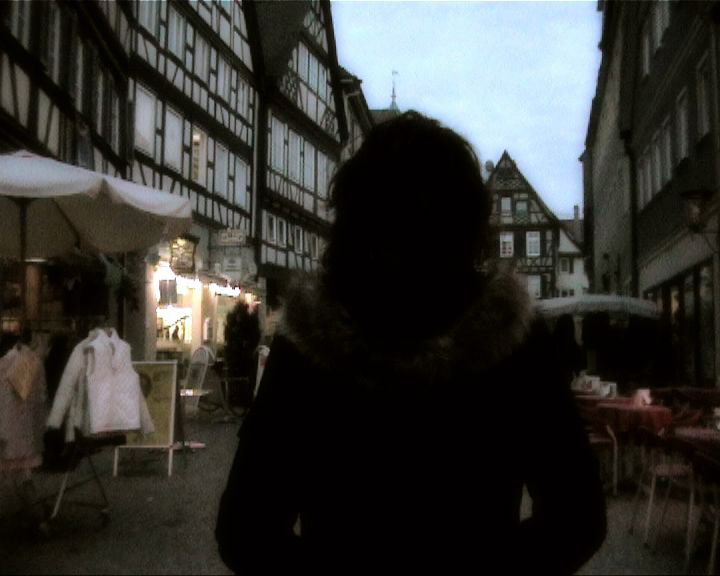
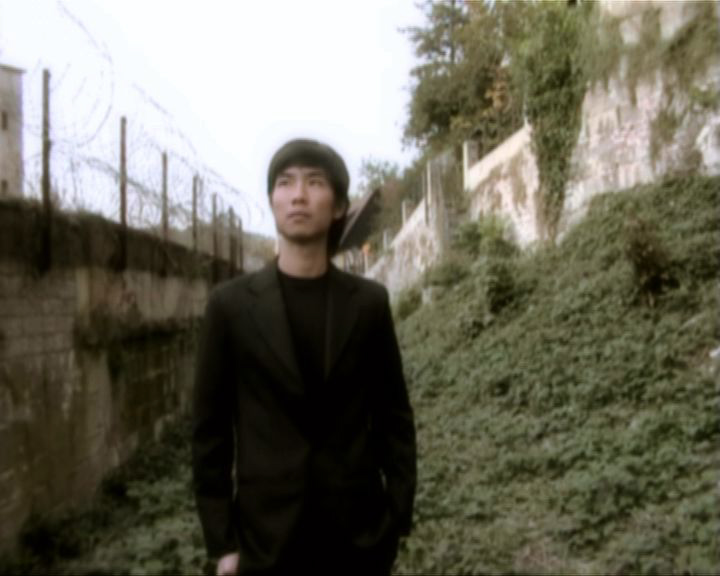
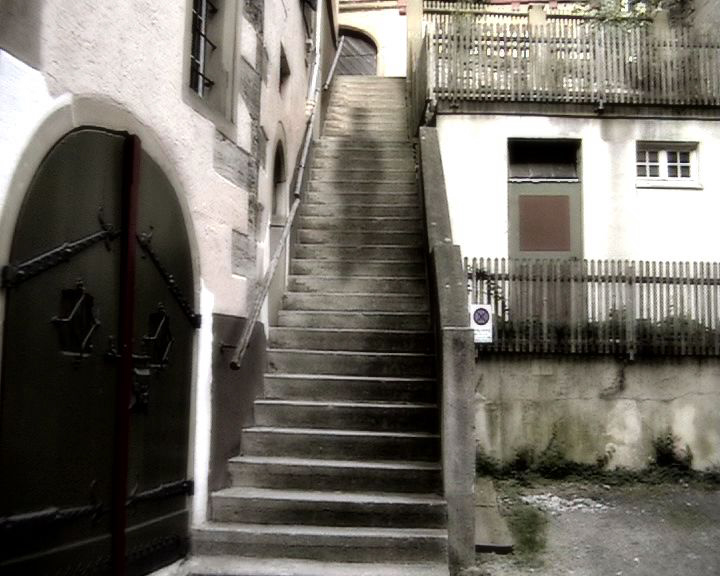
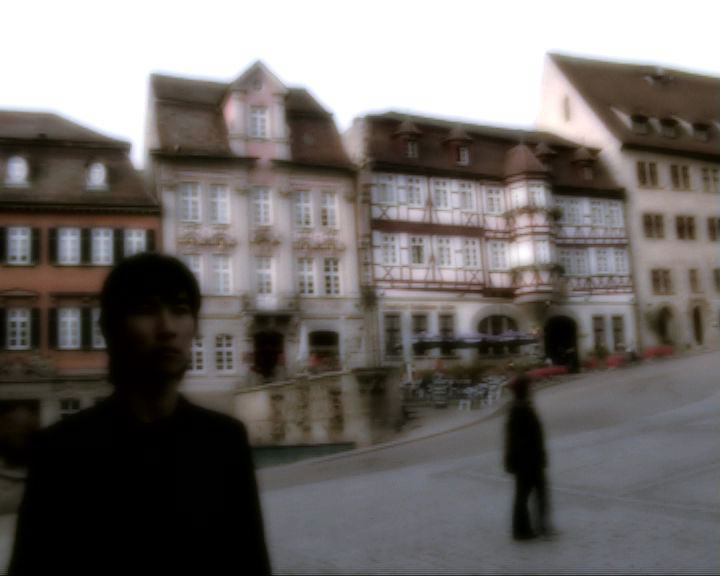
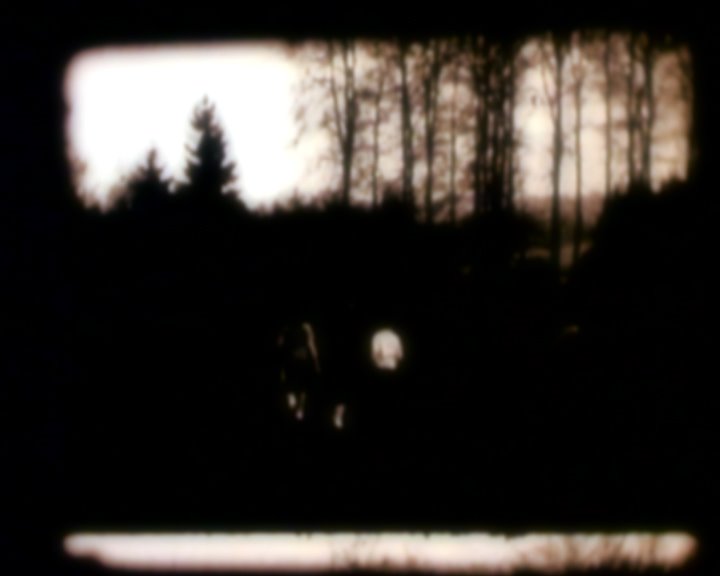
Series 1 of Uber memoria is comprised of 150 video paintings that explore the nature of locational memory through the moving image. Much of the artworks combine reconstituted 8mm family home movies c.1954-58 filmed in and around the same locations that I returned to 50 years later in Southern Germany and the UK. Travelling from Australia in October and then again in November 2006 to Stuttgart, Frankfurt, Schwaebisch Hall, Berlin and London, the works positions twenty different figures in mnemonic pretence mimicking the same kinds of poses found in religious paintings inside Saint Michael’s church, constituting a connection between the near present (memories of the visit to Southern Germany) and the past (deconstructing footage taken of the same area in the 1950s).

This merger of art and film constitute a filmic Romanticism that evidently probes the nostalgic facet of memory through places in both the visiting of locales filmed in the 1950s and also within the original film itself. As I go back to the places of my family’s home movies, the new works - most of which are slowed down to 10% speed - represent both the emotive and philosophical junctures with which film and memory coexist.


Shaun Wilson, video still, Uber memoria I (2006), HDV as multi-channel DVD, sound, colour, 25 mins.


Shaun Wilson, video still, Uber memoria I (2006), HDV as multi-channel DVD, sound, colour, 25 mins.


Shaun Wilson, video still, Uber memoria I (2006), HDV as multi-channel DVD, sound, colour, 25 mins.


Shaun Wilson, video still, Uber memoria I (2006), HDV as multi-channel DVD, sound, colour, 25 mins.


Shaun Wilson, video still, Uber memoria I (2006), HDV as multi-channel DVD, sound, colour, 25 mins.


Shaun Wilson, video still, Uber memoria I (2006), HDV as multi-channel DVD, sound, colour, 25 mins.


Shaun Wilson, video still, Uber memoria I (2006), HDV as multi-channel DVD, sound, colour, 25 mins.


Shaun Wilson, video still, Uber memoria I (2006), HDV as multi-channel DVD, sound, colour, 25 mins.


Shaun Wilson, video still, Uber memoria I (2006), HDV as multi-channel DVD, sound, colour, 25 mins.


Shaun Wilson, video still, Uber memoria I (2006), HDV as multi-channel DVD, sound, colour, 25 mins.


Shaun Wilson, video still, Uber memoria I (2006), HDV as multi-channel DVD, sound, colour, 25 mins.

Video $15,000 AUD

NEW06


Shaun Wilson, video still from 1975 (2006), DV as single channel DVD, sound, colour, 120 mins.

Curated by Juliana Enberg
Australian Centre of Contemporary Art, 14.03.2006 - 14.05.2006
Melbourne, Australia
Shaun Wilson's New06 podcast interview

Helen Johnson
Makeshift
Laresa Kosloff
Natasha Johns-Messenger
Darren Sylvester
Giles Ryder
Shaun Wilson

ACCA's annual showcase of new commissions by younger Australian artists, this year's NEW06 will be a sensory experience, one of palaces, pop, mazes and mirrors, childhood memories and merchandise. It will feature installations, sculptures, sound works, photography, video and painting, showcasing the diversity and verve of Australia's visual arts talent (ACCA website).

Shaun Wilson on Modern Topographies

Shaun Wilson
Modern Topographies catalogue essay
24hrArt: NT Centre of Contemporary Art,
09.07.04 - 07.08.04
Darwin, Australia

There has been much dialogue in recent times concerning the issue of boarder protection. Whether it is terms such as ‘queue jumper’, 'illegal immigrant’ or ‘boat people’, the plight of the refugee is by its very nature a sensitive and complex topic. Moreover, the philosophical issues that arrise from the detainment of refugees in Australia raise important questions about nationalism, place, identity and memory.

On the one hand, the refugee is fleeing their native environment – their native place – due to a number of reasons that may include war, religious or political persecution. In doing so, a new place is sought to inhabit. However, the unsolicited entry into Australia is often met with hostiliy and suspicion resulting in the forceful detainment of these individuals into a foreign and unfamiliar place.

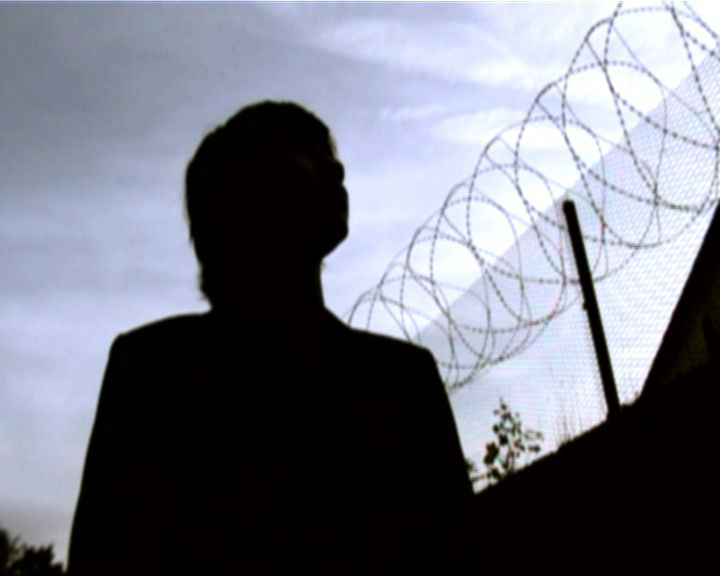
On the other hand, memories of these native places are often mapped onto the localities that are experienced within the places of detainment. For example, if someone inhabited a village for most of their life, the memories of such a place would become part of their identity. Moveover, the design of architecture, family traditions and cultural practice, in particular, would be unique to their specific surroundings. However, when the same person leaves their native environment for the aforementioned reasons the manner in which that person interacts with their new surroundings is characterised by the comparisons made between what they perceive in the present with the memories of experiences located in the past. If the mapping of such perspectives involves the places of both the past and the present, what is to become of a person identity? Can the places of internment define a new identity or is it a corruption of an old one? Perhaps these memories of the past are traumatic and triggered by objects in the places of internment – razor wire might prompt a memory of war just as uniformed staff might prompt memories of military or terrorist action.

One might argue that memory and place have such impact on the identity of the refugee that internment places open up another kind of space – a modern topography. These are the philosophical spaces developed by those who experience and move through internment places that are characterised by the memories of another.

Responding to this idea I have developed a series of miniature landscapes that depict internment places from both interior and exterior views – those who look in and those who look out. By videographing these artworks a secondary artwork emerges that reflect other places, namely the extracts from topographical views documented through standard 8mm home movies. By doing so, the viewer witnesses a morphing of scenes that combine the idyllic with the traumatic. Here, we see the modern topography come to life through a kaleidoscope of memory and narrative that seeks to question and discover.

- Shaun Wilson, July 2004.

Memory, Place and Film

Jeff Malpas
Filmic Memorials i Catalogue, 10.2005

‘Every film starts off from memories’, says Wim Wenders, ‘and every film is also a sum of many memories. Then again, every film creates memories’. Memories can take many forms, but for most of us memory and image are indeed closely interrelated. The memory takes the form of an image, while images are themselves typically imbued with or evocative of memories. There is also a direct connection between memory and place – the two are. Perhaps the most important reason for this is the ‘indexical’ character of memory. Memory always places us somewhere and every memory always involves us in some sort of bodily orientation. Memory is tied to the body and so also to place. This means that memory brings body and place with it, but body and place also bring memory. Memory – and so also the sense of a past – is part of the very fabric of place. Perhaps the best example of this in Wim Wenders’ work is in his homage to Berlin, Wings of Desire. In that movie, the city is perhaps the leading character in the film – indeed the original title was Himmel über Berlin (‘Heaven over Berlin’), while Wenders himself says that ‘the city called the film into being’.

It is a film, one might say, about the spirit of a city as much as it is also about the spirit of human life in that city, and it is also a film that plays with the fabric of the city as constituted in memory, in memorialisation, in the past and in the future (for memory is never only about the past). Shaun Wilson’s work, while not on the same scale as Wenders’, nevertheless exemplifies a similar connection between memory and place, and between both of these and the filmic image. Wilson’s works not only explore the almost tangible congealing of memories into embodied places, as both are then replayed through the medium of film, but the phenomenal texture of the images that result also carry something of the same phenomenal texture as is to be found in memory as such – the texture of that which is never completely given, never completely determined, always redolent of something more.

Of course, if place and memory are connected, then so too is there a special connection between place and memory that is apparent in the moving image of the film. Although we may sometimes assume that places only apparent with the ceasing of movement, the opposite is actually the case: place and places appear only as we move between and through such places. The moving quality of the filmic image can be seen as representative of just such movement. In film, of course, there are at least two types of movement that need to be considered. There is the movement that occurs within the cinematic field – the movement of a character across a street, for instance, as it is filmed in a single wide angle shot – but there is also the movement that affects the cinematic field as a whole – the movement that involves the movement of that which films, the camera, rather than of that which is filmed.

Andy Warhol’s famous Empire, in which the camera remains trained, umovingly, on the Empire State Building through a full 24 hours, is an example of a movie constituted purely through movement within the cinematic field, and the fact that it is so constituted, while it makes it an interesting artistic work, also makes it into a rather unexciting experience if watched for its full length. Most film and video depends on combining movement that occurs within the field with movement of the field itself – few movies are composed of static shots alone. Why should this be? Because what a movie does is to put us into a place in a certain way and it does so not merely through giving us a static window on a part of that place, but through allowing us, in a limited fashion, to explore that place and respond to it. In this way film takes us somewhere, and the means it employs to achieve this is the combination of light and movement, in a phrase, the moving image – but the image moves in at least the two ways that I have just distinguished. That means the way in which place appears and is articulated in film is through these two modes of movement, usually in combination. The tracking shot, the pan, the zoom, are all ways of moving the cinematic field, and they are also ways of exploring and articulating the space and place in which the filmic action is itself set and by means of which it is framed and determined.

Typically, different ways of moving the cinematic field, that is different shots, are associated with different ways of presenting filmic places – the sweeping shot, which often comes to focus on a source of movement that occurs within the field, is characteristic of the cinematic presentation of the epic landscape. I am emphasising the two forms of movement that come together in movie because it is movement that plays a key role in the articulation of place, and it is in and through place that such elements as character and plot, but also emotion and affect, and memory also, are articulated and presented (which is not to say that other elements besides the visual are not important also, but only that my focus here is on the formation of place as constituted through the moving image). One way of understanding place, and the memories that are embodied within it, is purely in terms of the movements that it enables and by which it is known. Underlying all of these comments about place, memory and film has been a set of ideas about, not merely the importance of place to film or even just the connection between memory and place, but of the importance of place to image (and imagination), to identity, to self and to ‘meaning’.

The sorts of beings we are, though we may often think otherwise, is such that we are ourselves inextricably bound to the places through which we move and in which we dwell. Our identities, as with our memories, are tied to those places. As soon as we attempt to make sense of ourselves, to represent or articulate ourselves, then we are also involved in articulating and representing place. It is thus no surprise then, that this same connection should turn out to be an integral part of film. ‘Every film creates memories’ says Wenders, and so every film also creates, and is a creation of, places – a creation, and recreation, of identity and self.

Text copyright Jeff Malpas, 2005. All rights reserved.

If you liked this essay then read some of jeff's many publications including:
  • Donald Davidson and the Mirror of Meaning (Cambridge: Cambridge University Press, 1992).
  • Place and Experience: A Philosophical Topography (Cambridge: Cambridge University Press, 1999). [personal favourite!]
  • Heidegger’s Topology: Being, Place, World (Cambridge, Mass.:, MIT Press, forthcoming).

Doug Church on Australian Gothic

Doug Church
Australian Gothic: Video Art Now exhibition catalogue essay
Project Space/Spare Room, Melbourne: 05.02.2007 - 28.02.2007
The Directors Lounge, Berlin: 08.02.2007 - 18.02.2007

In his essay ‘Australian Gothic’, Gerry Turcotte frames the idea that ‘long before the fact of Australia was ever confirmed by explorers and cartographers it had already been imagined as a grotesque space, a landed peopled by monsters. …it was for all intents and purposes, Gothic par excellence, the dungeon of the world. (Turcotte, 10) As he further establishes that a ‘Gothic mode’ existed in Australian literature from the comparative observations of a European settlement at odds with a strange and hostile environment, the continuation of this ‘mode’ is not unlike the current thread running through Australian video art as evidenced in the exhibition Australian Gothic.

Underpinning this mode is not entirely an easy matter. The historic term ‘gothic’ is, in itself, a direct translation meaning ‘bad German style’ coined by Renaissance scholars as an insult commonly used to describe medieval architecture and the decorative arts from the eleventh century onwards. And lets not forget the contemporary evolution of goth subculture from the late twentieth century loosely based on modern adaptations of Neoromanticism: these all play out a significant roll in contemporary art but to inform a gothic mode through video art requires a different understanding that has more to do with Goya than it does with Anne Rice or The Sisters of Mercy.

In Two Birds with One Stone (2006), Brendan Lee gives us a taste for this role by dissecting aspects ofAustralian 'badlands' cinema where he reinvents a prison meeting room. 'Filmed in a menacing blue hue, two prison inmates by the name of Scumnuts and Pigkiller, speak in aggressive tones, their actions embellished by a vibrating projection screen which 'assaults' the viewer. Created in the Australian prison genre, Lee takes his inspiration from movies such as Stir, Ghost ofthe Civil Dead and Chopper. He considers the language of film, why we are no longer shocked by violence and how easily we can be seduced by imagery.' (Bullock, 2006).

Originally exhibited at the Art Gallery of New South Wales in 2006, Two Birds with One Stone positions itself to what Roger Ebert asks: ‘is everybody in Australia a few degrees from true north? (Ebert, 2001) The unsettling nature of Lee’s video work draws close proximity to Australian national cinema yet the oddity found within the subject is that these recreations invite the viewer to articulate these themes through an uneasy and at times, abusive framework. The dark, noir-like scenes seduce the viewer with its Caravaggio-like thespian compositions until the violent dialogue between Scum nuts and Pig Killer takes hold of a darker level where the viewer is ultimately confronted and challenged with Lee’s attention to disturbance.

As with his earlier works that employ similar conceptual tactics, such as the video installation Role Model (2005), Two Birds with One Stone establishes visual strategies not unlike the seductive and stoic barbaric-ness of Goya’s Coloso (1810-12). Both works, which share similar lighting and tonal values, convey a quintessential gothic mode in that the implicit nature of violence looms within the suggestion of barbaric overtones – it is the alluring to what has just happened or what might occur that holds a central power over the viewer.

The same sort of dark imagery lurks in Alex Avtzoglou’s One Two Red Blue (2006). The surreal and grotesque nature of Avtzoglou’s video work draws personal influence from experimental silent film such as Georges Melies Le Voyage dans la Lune (1902) and circus-themed cinema/theatre. This often psychologically disturbing ménage of noir-like images taps into a stream of picto-historic references stretching from Surrealist film to Stan Brakhage that follow the exploits of two female circus performers. Interlaced within this narrative is a performative sequence by which one such character seductively strokes and fondles a large dead octopus to then massage the creature into her face and through her long draped hair.

This particular work is surprisingly sumptuous in colour and light that brings about the same kind of barbaric seduction that Lee generates in Two Birds with One Stone. The viewer cannot help but consider Avtzoglou’s clever positioning of aesthetics as a pleasing and somewhat comforting assurance that such delicate images provoke a disturbing undercurrent hiding beneath the artist’s bag of cephalopodan tricks.

Just as author Hans Belting argues that video art ‘attracts the attention of the public with the help of a kind of mirror’ (Belting, 87), One Two Red Blue acts as a mirror of the grotesque to temporarily lull its audience into a false sense of visual harmony as the jump cuts steer away from the octopus sequence and back into the childlike actions of our two circus performers; hiding in boxes and twirling Hula Hoops. Yet we are left pondering to the fact are we watching a surreal dream or is this experience through the waking hours? The dreamlike mirror of the gothic mode certainly has as much to do in Avtzoglou’s work as it does with Robert Hughes’s own account of being hospitalised after his near-death car accident by which he laments that in his dreams ‘time [was] wholly lost in their maze’. (Hughes, 9) And this is exactly what One Two Red Blue subscribes, to become lost in a series of moments where time no longer exists; only the surreal notion of a strange and repulsive desire lurks beneath a gentrified image dislocated through the logic of uncertainty.

Tammy Honey’s Threesome (2006) constructs a different type of desire through a similar kind of ‘mirror’. Based on her long-term investigation into the merger between the quest for fame through pop music and the visual nature of MP3 advertising, Honey brings to life three versions of herself in the one frame singing along to a headphones track with a nail biting, tone-deaf performance. It is hard to decide whether Threesome is a music video clip or a video clip about music. Either way it provokes a deeper level of examination into the reasons why some obsess with the desire for fame through pop music as evidenced in reality-television programs such as Australian Idol, and Pop Star. Moreover, like the CD Karaoke: So You Wanna be a Pop Star Vol. 1-3 (2003), Honey brings to our attention through these pop desires that an uneasy tension is created by these noted dissatisfactions of the every day life by dreams and delusions of chart-climbing fame and fortune.

Further, Honey carefully involves the idea of ridicule. Perhaps one of the most entertaining parts of reality TV pop music programs is the inability for talent-challenged contestants to recognised they cannot sing when in fact they believe without question their ‘talent’ has promise. Indeed, with quotes such as American Idol’s Simon Cowell ‘If your lifeguard duties were as good as your singing, a lot of people would be drowning’ it is hard not to see why Threesome places this performance brutality on screen. The viewer cannot help but to assume the preconditioned role of a judge in grading the performance we see projected in front of us. Yet this conceptual role forced onto the viewer, perhaps without himself or herself knowing that they are no longer a spectator or an observer but rather, now, a judge, demonstrates how a darker role of condemnation can be effectively used and, consequently, integrated through video art. One might argue that from this, other video work that uses parody and ridicule can also be closely liked to Threesome, in particularly Chris Cunningham’s ‘commentary on sex, cars and cellulite in hip-hop clips for Aphex Twin’s Windowlicker.’ (Weir, 39)

Brie Trenerry’s Sleep Paralysis (2006) also holds a dark embrace by subjecting the viewer to the artists collection of live flies especially bread (approximately 600 of them) for the work. We see a lifeless hand - perhaps dead, unconscious or maybe just asleep – posed in a delicate Renaissance-like stillness, originally exhibited in She Creeps at Spacement Gallery, Melbourne and Monash University’s Switchback Gallery, Churchill, in 2006.

Ashley Crawford describes this work as ‘deeply creepy, but its also infused with a kind of timeless elegance. Trenerry’s mastery of line is the key binding this gothic blue that combines images of nature run amok and hints of dark deeds’. (Crawford, 2006). And these dark deeds underpin the fascination of ‘what is about to happen next?’ Once the viewer gets past the notion of taboos – the ‘diseased’ fly crawling on the human skin without interruption – we might be forgiven in our quest to ask why this hand is not moving? Is she okay? Who did this? Is she dead?

Deeply emersed in an overtly romantic and tragic setting, Trenerry plays with her images by letting the central characters – those nasty flies –do all the work. Perhaps Sleep Paralysis has more to do with Honey’s Threesome in that the reaction each artists places onto the viewer can draw parallels, that of slow discomfort and mild irritation. Trenerry’s work is not only ‘deeply creepy’ but also deeply disturbing that further suggests a gothic mode in play – the seduction of aesthetics and the hidden oddities of horror.

Not surprising are the suggestions of cinema in Trenerry’s images that give rise to narrative structures closely linked to Film Noir. In a scene from Joseph Losely’s The Prowler (1951), Webb Garwood (Van Heflin), a policeman, bends down to the lifeless body of William Gilvray (Emerson Tracey) who lies motionless in frame. Arguably the most iconic scene of the film, Gilvray’s hand is extended outwards, perfectly still. Returning to Trenerry’s work, Gilvray’s pose closely interrelates with the fly travelled hand as the corpse or the sleeper holds darkened implications for the viewer in both scenes that Trenerry has carefully managed to compose.

Paying close attention to cinema of a different kind, Shaun Wilson’s Ubber Memoria series explores the imbeddedness of memory and its subsequent impact on places from vintage 8mm home movies. The series itself was filmed twice on separate visits to Southern Germany and London in October/November 2006 where the specific sites had been originally filmed by Wilson’s grandfather on 8mm film during the same months in 1956. This collection of noir-like images make up a total of 150 works belonging to a wider series (a selection of which are showing at Project Space exhibition) that Wilson himself describes as ‘video paintings’. The oddity of this series is what Briony Lee Davis describes as ‘a deep sense of foreboding’ (Lee Davis, 84) The various scenes in Ubber Memoria [IV] are slowed to 5% film speed which cause a random, clunky movement between frames that can be unsettling at times when offset by the conversion of 24 frames per second into 25 not to mention the griding and harmonious audio tracks blended together. Parts of the video are layered with old footage blended into the new as backgrounds contain a distant past filed with imperfects and lost memories.

The technique that Wilson calls ‘stacking’ is a painstakingly crafted with close attention to the imperfections of home movies and how they in turn, when grafted onto new film create what Leon Marven calls ‘deep time’. (Marvell, 77) At first glance these works appear ‘pretty’ but as the duration of the video progresses one cannot help but feel discomforted by the schizophrenic film speed coupled with the intrusive stares of the characters looking straight at the viewer. We no longer become the un-noticed observer to find that we are, in fact, being observed. If Derrida was correct in describing the act of deconstruction as an indefinable decision which cannot be judged, Wilson plays with his audience by cementing two filmic examples of the past together that evidently watches the viewer through indefinability played out through a subtle and unforgiving gothic mode.

So from these mentioned works and others, finding the presence of this gothic mode in video art involves the seduction of imagery hinted with deeper and dangerous levels. While these examples are all but merely a small slice of a larger surface area, a common thread that unites these works are the attention to a darker side of image making masked through seduction. From Honey’s pop desires to Lee’s Scum nut’s and Pig Killer, the oddities of these kinds of works bring the ability to create mirrors of internal reflection that remix a darkened conceptual space into an uneasy and difficult territory.

References

[1] Hans Belting, Art History after Modernism, Chicago University Press, 2003.
[2] Ashley Crawford, ‘John Abbate & Brie Trenerry’, Spacement online archive, Spacement Gallery, Melbourne 2006.
[3] Natahsa Bullock, from the Brendan Lee artist website, , last accessed 10 December 2006.
[4] Briony Lee Davis, ‘Boogy Jive and Bop’, Artlink, Vol.24, No.2, 2004.
[5] Roger Ebert, ‘Chopper’, Robertebert.com.
[6] Robert Hughes, Goya, Vintage, 2004.
[7] Douglas Kellner, Cultural Studies, Identity and Politics between the Modern and the Post Modern, Routledge, 2003.
[8] Leon Marvell, ‘Brendan Lee, Shaun Wilson, Alexandra Gillies’, Photofile, Australian Centre of Photography, No. 76 Summer 2006.
[9] Roger Scruton, Modern Culture, Continuum, London, 2005.
[10] Gerry Turcotte, ‘Australian Gothic’, in Mulvey Roberts (ed) The Handbook to Gothic Literature, Macmillan, Basingstoke, 1998, pp 10-19.
[11] Kathryn Weir, ‘Jump Cut: Music Video Aesthetics’, in Video Hits: Art & Music Video, Queensland Art Gallery, 2004.