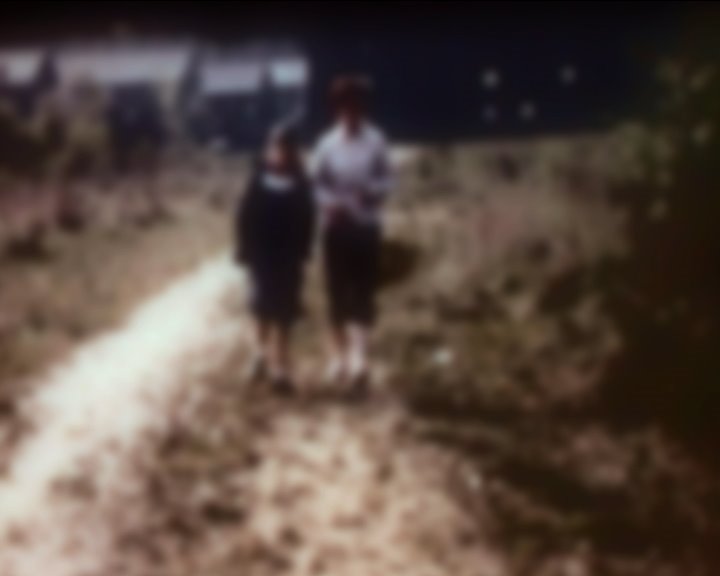
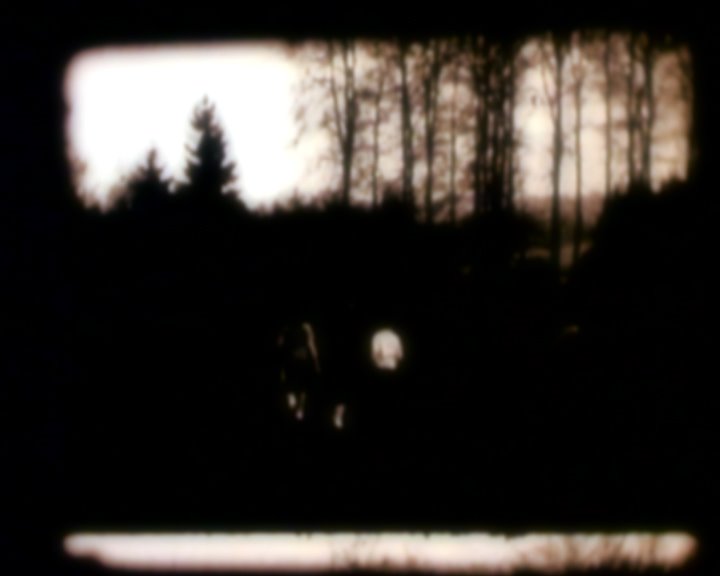
19 December 2006

Memory, Place and Film

Jeff Malpas
Filmic Memorials i Catalogue, 10.2005

‘Every film starts off from memories’, says Wim Wenders, ‘and every film is also a sum of many memories. Then again, every film creates memories’. Memories can take many forms, but for most of us memory and image are indeed closely interrelated. The memory takes the form of an image, while images are themselves typically imbued with or evocative of memories. There is also a direct connection between memory and place – the two are. Perhaps the most important reason for this is the ‘indexical’ character of memory. Memory always places us somewhere and every memory always involves us in some sort of bodily orientation. Memory is tied to the body and so also to place. This means that memory brings body and place with it, but body and place also bring memory. Memory – and so also the sense of a past – is part of the very fabric of place. Perhaps the best example of this in Wim Wenders’ work is in his homage to Berlin, Wings of Desire. In that movie, the city is perhaps the leading character in the film – indeed the original title was Himmel über Berlin (‘Heaven over Berlin’), while Wenders himself says that ‘the city called the film into being’.

It is a film, one might say, about the spirit of a city as much as it is also about the spirit of human life in that city, and it is also a film that plays with the fabric of the city as constituted in memory, in memorialisation, in the past and in the future (for memory is never only about the past). Shaun Wilson’s work, while not on the same scale as Wenders’, nevertheless exemplifies a similar connection between memory and place, and between both of these and the filmic image. Wilson’s works not only explore the almost tangible congealing of memories into embodied places, as both are then replayed through the medium of film, but the phenomenal texture of the images that result also carry something of the same phenomenal texture as is to be found in memory as such – the texture of that which is never completely given, never completely determined, always redolent of something more.

Of course, if place and memory are connected, then so too is there a special connection between place and memory that is apparent in the moving image of the film. Although we may sometimes assume that places only apparent with the ceasing of movement, the opposite is actually the case: place and places appear only as we move between and through such places. The moving quality of the filmic image can be seen as representative of just such movement. In film, of course, there are at least two types of movement that need to be considered. There is the movement that occurs within the cinematic field – the movement of a character across a street, for instance, as it is filmed in a single wide angle shot – but there is also the movement that affects the cinematic field as a whole – the movement that involves the movement of that which films, the camera, rather than of that which is filmed.

Andy Warhol’s famous Empire, in which the camera remains trained, umovingly, on the Empire State Building through a full 24 hours, is an example of a movie constituted purely through movement within the cinematic field, and the fact that it is so constituted, while it makes it an interesting artistic work, also makes it into a rather unexciting experience if watched for its full length. Most film and video depends on combining movement that occurs within the field with movement of the field itself – few movies are composed of static shots alone. Why should this be? Because what a movie does is to put us into a place in a certain way and it does so not merely through giving us a static window on a part of that place, but through allowing us, in a limited fashion, to explore that place and respond to it. In this way film takes us somewhere, and the means it employs to achieve this is the combination of light and movement, in a phrase, the moving image – but the image moves in at least the two ways that I have just distinguished. That means the way in which place appears and is articulated in film is through these two modes of movement, usually in combination. The tracking shot, the pan, the zoom, are all ways of moving the cinematic field, and they are also ways of exploring and articulating the space and place in which the filmic action is itself set and by means of which it is framed and determined.

Typically, different ways of moving the cinematic field, that is different shots, are associated with different ways of presenting filmic places – the sweeping shot, which often comes to focus on a source of movement that occurs within the field, is characteristic of the cinematic presentation of the epic landscape. I am emphasising the two forms of movement that come together in movie because it is movement that plays a key role in the articulation of place, and it is in and through place that such elements as character and plot, but also emotion and affect, and memory also, are articulated and presented (which is not to say that other elements besides the visual are not important also, but only that my focus here is on the formation of place as constituted through the moving image). One way of understanding place, and the memories that are embodied within it, is purely in terms of the movements that it enables and by which it is known. Underlying all of these comments about place, memory and film has been a set of ideas about, not merely the importance of place to film or even just the connection between memory and place, but of the importance of place to image (and imagination), to identity, to self and to ‘meaning’.

The sorts of beings we are, though we may often think otherwise, is such that we are ourselves inextricably bound to the places through which we move and in which we dwell. Our identities, as with our memories, are tied to those places. As soon as we attempt to make sense of ourselves, to represent or articulate ourselves, then we are also involved in articulating and representing place. It is thus no surprise then, that this same connection should turn out to be an integral part of film. ‘Every film creates memories’ says Wenders, and so every film also creates, and is a creation of, places – a creation, and recreation, of identity and self.

Text copyright Jeff Malpas, 2005. All rights reserved.

If you liked this essay then read some of jeff's many publications including:
  • Donald Davidson and the Mirror of Meaning (Cambridge: Cambridge University Press, 1992).
  • Place and Experience: A Philosophical Topography (Cambridge: Cambridge University Press, 1999). [personal favourite!]
  • Heidegger’s Topology: Being, Place, World (Cambridge, Mass.:, MIT Press, forthcoming).

Doug Church on Australian Gothic

Doug Church
Australian Gothic: Video Art Now exhibition catalogue essay
Project Space/Spare Room, Melbourne: 05.02.2007 - 28.02.2007
The Directors Lounge, Berlin: 08.02.2007 - 18.02.2007

In his essay ‘Australian Gothic’, Gerry Turcotte frames the idea that ‘long before the fact of Australia was ever confirmed by explorers and cartographers it had already been imagined as a grotesque space, a landed peopled by monsters. …it was for all intents and purposes, Gothic par excellence, the dungeon of the world. (Turcotte, 10) As he further establishes that a ‘Gothic mode’ existed in Australian literature from the comparative observations of a European settlement at odds with a strange and hostile environment, the continuation of this ‘mode’ is not unlike the current thread running through Australian video art as evidenced in the exhibition Australian Gothic.

Underpinning this mode is not entirely an easy matter. The historic term ‘gothic’ is, in itself, a direct translation meaning ‘bad German style’ coined by Renaissance scholars as an insult commonly used to describe medieval architecture and the decorative arts from the eleventh century onwards. And lets not forget the contemporary evolution of goth subculture from the late twentieth century loosely based on modern adaptations of Neoromanticism: these all play out a significant roll in contemporary art but to inform a gothic mode through video art requires a different understanding that has more to do with Goya than it does with Anne Rice or The Sisters of Mercy.

In Two Birds with One Stone (2006), Brendan Lee gives us a taste for this role by dissecting aspects ofAustralian 'badlands' cinema where he reinvents a prison meeting room. 'Filmed in a menacing blue hue, two prison inmates by the name of Scumnuts and Pigkiller, speak in aggressive tones, their actions embellished by a vibrating projection screen which 'assaults' the viewer. Created in the Australian prison genre, Lee takes his inspiration from movies such as Stir, Ghost ofthe Civil Dead and Chopper. He considers the language of film, why we are no longer shocked by violence and how easily we can be seduced by imagery.' (Bullock, 2006).

Originally exhibited at the Art Gallery of New South Wales in 2006, Two Birds with One Stone positions itself to what Roger Ebert asks: ‘is everybody in Australia a few degrees from true north? (Ebert, 2001) The unsettling nature of Lee’s video work draws close proximity to Australian national cinema yet the oddity found within the subject is that these recreations invite the viewer to articulate these themes through an uneasy and at times, abusive framework. The dark, noir-like scenes seduce the viewer with its Caravaggio-like thespian compositions until the violent dialogue between Scum nuts and Pig Killer takes hold of a darker level where the viewer is ultimately confronted and challenged with Lee’s attention to disturbance.

As with his earlier works that employ similar conceptual tactics, such as the video installation Role Model (2005), Two Birds with One Stone establishes visual strategies not unlike the seductive and stoic barbaric-ness of Goya’s Coloso (1810-12). Both works, which share similar lighting and tonal values, convey a quintessential gothic mode in that the implicit nature of violence looms within the suggestion of barbaric overtones – it is the alluring to what has just happened or what might occur that holds a central power over the viewer.

The same sort of dark imagery lurks in Alex Avtzoglou’s One Two Red Blue (2006). The surreal and grotesque nature of Avtzoglou’s video work draws personal influence from experimental silent film such as Georges Melies Le Voyage dans la Lune (1902) and circus-themed cinema/theatre. This often psychologically disturbing ménage of noir-like images taps into a stream of picto-historic references stretching from Surrealist film to Stan Brakhage that follow the exploits of two female circus performers. Interlaced within this narrative is a performative sequence by which one such character seductively strokes and fondles a large dead octopus to then massage the creature into her face and through her long draped hair.

This particular work is surprisingly sumptuous in colour and light that brings about the same kind of barbaric seduction that Lee generates in Two Birds with One Stone. The viewer cannot help but consider Avtzoglou’s clever positioning of aesthetics as a pleasing and somewhat comforting assurance that such delicate images provoke a disturbing undercurrent hiding beneath the artist’s bag of cephalopodan tricks.

Just as author Hans Belting argues that video art ‘attracts the attention of the public with the help of a kind of mirror’ (Belting, 87), One Two Red Blue acts as a mirror of the grotesque to temporarily lull its audience into a false sense of visual harmony as the jump cuts steer away from the octopus sequence and back into the childlike actions of our two circus performers; hiding in boxes and twirling Hula Hoops. Yet we are left pondering to the fact are we watching a surreal dream or is this experience through the waking hours? The dreamlike mirror of the gothic mode certainly has as much to do in Avtzoglou’s work as it does with Robert Hughes’s own account of being hospitalised after his near-death car accident by which he laments that in his dreams ‘time [was] wholly lost in their maze’. (Hughes, 9) And this is exactly what One Two Red Blue subscribes, to become lost in a series of moments where time no longer exists; only the surreal notion of a strange and repulsive desire lurks beneath a gentrified image dislocated through the logic of uncertainty.

Tammy Honey’s Threesome (2006) constructs a different type of desire through a similar kind of ‘mirror’. Based on her long-term investigation into the merger between the quest for fame through pop music and the visual nature of MP3 advertising, Honey brings to life three versions of herself in the one frame singing along to a headphones track with a nail biting, tone-deaf performance. It is hard to decide whether Threesome is a music video clip or a video clip about music. Either way it provokes a deeper level of examination into the reasons why some obsess with the desire for fame through pop music as evidenced in reality-television programs such as Australian Idol, and Pop Star. Moreover, like the CD Karaoke: So You Wanna be a Pop Star Vol. 1-3 (2003), Honey brings to our attention through these pop desires that an uneasy tension is created by these noted dissatisfactions of the every day life by dreams and delusions of chart-climbing fame and fortune.

Further, Honey carefully involves the idea of ridicule. Perhaps one of the most entertaining parts of reality TV pop music programs is the inability for talent-challenged contestants to recognised they cannot sing when in fact they believe without question their ‘talent’ has promise. Indeed, with quotes such as American Idol’s Simon Cowell ‘If your lifeguard duties were as good as your singing, a lot of people would be drowning’ it is hard not to see why Threesome places this performance brutality on screen. The viewer cannot help but to assume the preconditioned role of a judge in grading the performance we see projected in front of us. Yet this conceptual role forced onto the viewer, perhaps without himself or herself knowing that they are no longer a spectator or an observer but rather, now, a judge, demonstrates how a darker role of condemnation can be effectively used and, consequently, integrated through video art. One might argue that from this, other video work that uses parody and ridicule can also be closely liked to Threesome, in particularly Chris Cunningham’s ‘commentary on sex, cars and cellulite in hip-hop clips for Aphex Twin’s Windowlicker.’ (Weir, 39)

Brie Trenerry’s Sleep Paralysis (2006) also holds a dark embrace by subjecting the viewer to the artists collection of live flies especially bread (approximately 600 of them) for the work. We see a lifeless hand - perhaps dead, unconscious or maybe just asleep – posed in a delicate Renaissance-like stillness, originally exhibited in She Creeps at Spacement Gallery, Melbourne and Monash University’s Switchback Gallery, Churchill, in 2006.

Ashley Crawford describes this work as ‘deeply creepy, but its also infused with a kind of timeless elegance. Trenerry’s mastery of line is the key binding this gothic blue that combines images of nature run amok and hints of dark deeds’. (Crawford, 2006). And these dark deeds underpin the fascination of ‘what is about to happen next?’ Once the viewer gets past the notion of taboos – the ‘diseased’ fly crawling on the human skin without interruption – we might be forgiven in our quest to ask why this hand is not moving? Is she okay? Who did this? Is she dead?

Deeply emersed in an overtly romantic and tragic setting, Trenerry plays with her images by letting the central characters – those nasty flies –do all the work. Perhaps Sleep Paralysis has more to do with Honey’s Threesome in that the reaction each artists places onto the viewer can draw parallels, that of slow discomfort and mild irritation. Trenerry’s work is not only ‘deeply creepy’ but also deeply disturbing that further suggests a gothic mode in play – the seduction of aesthetics and the hidden oddities of horror.

Not surprising are the suggestions of cinema in Trenerry’s images that give rise to narrative structures closely linked to Film Noir. In a scene from Joseph Losely’s The Prowler (1951), Webb Garwood (Van Heflin), a policeman, bends down to the lifeless body of William Gilvray (Emerson Tracey) who lies motionless in frame. Arguably the most iconic scene of the film, Gilvray’s hand is extended outwards, perfectly still. Returning to Trenerry’s work, Gilvray’s pose closely interrelates with the fly travelled hand as the corpse or the sleeper holds darkened implications for the viewer in both scenes that Trenerry has carefully managed to compose.

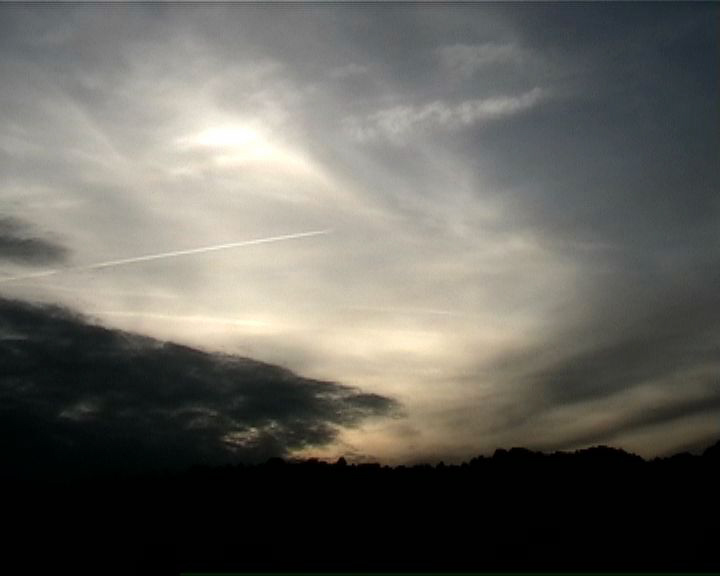
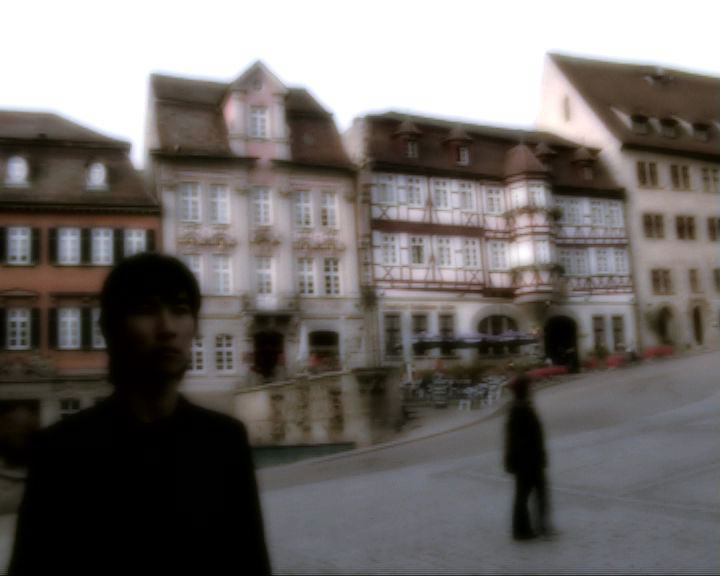
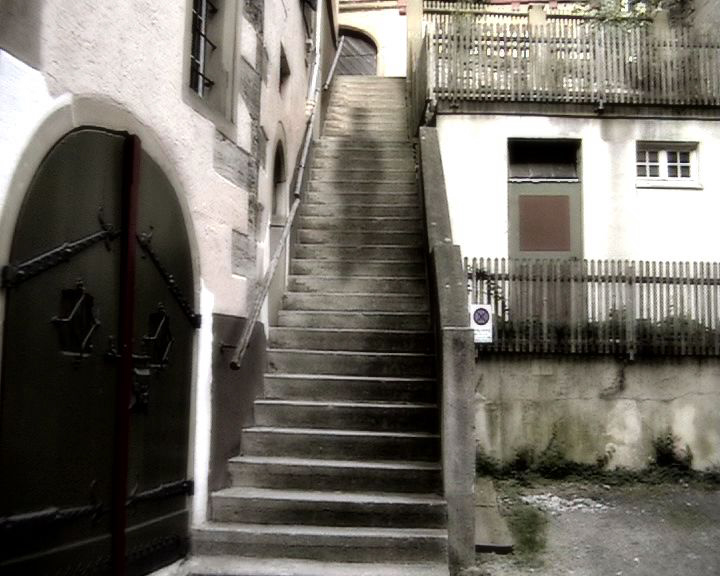
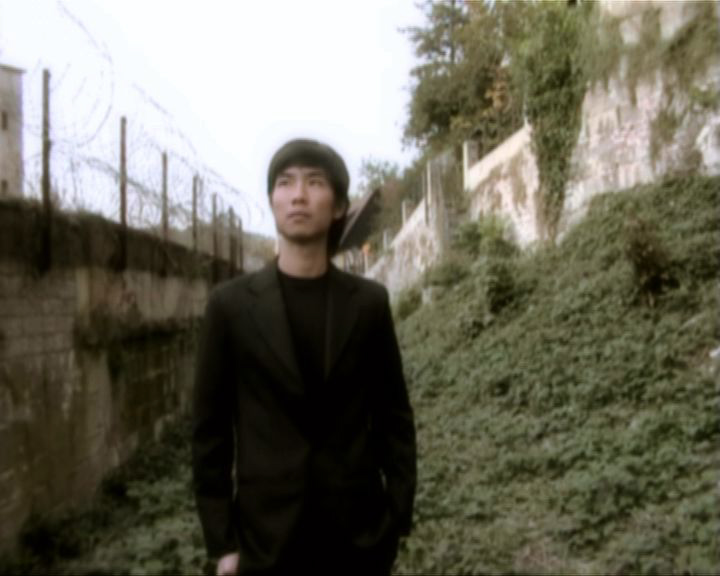
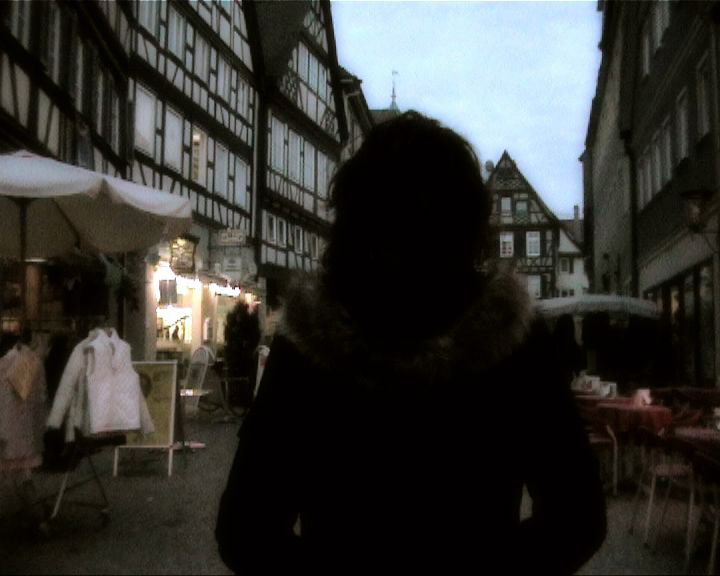
Paying close attention to cinema of a different kind, Shaun Wilson’s Ubber Memoria series explores the imbeddedness of memory and its subsequent impact on places from vintage 8mm home movies. The series itself was filmed twice on separate visits to Southern Germany and London in October/November 2006 where the specific sites had been originally filmed by Wilson’s grandfather on 8mm film during the same months in 1956. This collection of noir-like images make up a total of 150 works belonging to a wider series (a selection of which are showing at Project Space exhibition) that Wilson himself describes as ‘video paintings’. The oddity of this series is what Briony Lee Davis describes as ‘a deep sense of foreboding’ (Lee Davis, 84) The various scenes in Ubber Memoria [IV] are slowed to 5% film speed which cause a random, clunky movement between frames that can be unsettling at times when offset by the conversion of 24 frames per second into 25 not to mention the griding and harmonious audio tracks blended together. Parts of the video are layered with old footage blended into the new as backgrounds contain a distant past filed with imperfects and lost memories.

The technique that Wilson calls ‘stacking’ is a painstakingly crafted with close attention to the imperfections of home movies and how they in turn, when grafted onto new film create what Leon Marven calls ‘deep time’. (Marvell, 77) At first glance these works appear ‘pretty’ but as the duration of the video progresses one cannot help but feel discomforted by the schizophrenic film speed coupled with the intrusive stares of the characters looking straight at the viewer. We no longer become the un-noticed observer to find that we are, in fact, being observed. If Derrida was correct in describing the act of deconstruction as an indefinable decision which cannot be judged, Wilson plays with his audience by cementing two filmic examples of the past together that evidently watches the viewer through indefinability played out through a subtle and unforgiving gothic mode.

So from these mentioned works and others, finding the presence of this gothic mode in video art involves the seduction of imagery hinted with deeper and dangerous levels. While these examples are all but merely a small slice of a larger surface area, a common thread that unites these works are the attention to a darker side of image making masked through seduction. From Honey’s pop desires to Lee’s Scum nut’s and Pig Killer, the oddities of these kinds of works bring the ability to create mirrors of internal reflection that remix a darkened conceptual space into an uneasy and difficult territory.

References

[1] Hans Belting, Art History after Modernism, Chicago University Press, 2003.
[2] Ashley Crawford, ‘John Abbate & Brie Trenerry’, Spacement online archive, Spacement Gallery, Melbourne 2006.
[3] Natahsa Bullock, from the Brendan Lee artist website, , last accessed 10 December 2006.
[4] Briony Lee Davis, ‘Boogy Jive and Bop’, Artlink, Vol.24, No.2, 2004.
[5] Roger Ebert, ‘Chopper’, Robertebert.com.
[6] Robert Hughes, Goya, Vintage, 2004.
[7] Douglas Kellner, Cultural Studies, Identity and Politics between the Modern and the Post Modern, Routledge, 2003.
[8] Leon Marvell, ‘Brendan Lee, Shaun Wilson, Alexandra Gillies’, Photofile, Australian Centre of Photography, No. 76 Summer 2006.
[9] Roger Scruton, Modern Culture, Continuum, London, 2005.
[10] Gerry Turcotte, ‘Australian Gothic’, in Mulvey Roberts (ed) The Handbook to Gothic Literature, Macmillan, Basingstoke, 1998, pp 10-19.
[11] Kathryn Weir, ‘Jump Cut: Music Video Aesthetics’, in Video Hits: Art & Music Video, Queensland Art Gallery, 2004.

13 December 2006

Hearts of Darkness in the Australian Gothic

In his essay ‘Australian Gothic’, Gerry Turcotte frames the idea that ‘long before the fact of Australia was ever confirmed by explorers and cartographers it had already been imagined as a grotesque space, a landed peopled by monsters. …it was for all intents and purposes, Gothic par excellence, the dungeon of the world. (Turcotte, 10) As he further establishes that a ‘Gothic mode’ existed in Australian literature from the comparative observations of a European settlement at odds with a strange and hostile environment, the continuation of this ‘mode’ is not unlike the current thread running through Australian video art as evidenced in the exhibition Australian Gothic.

Underpinning this mode is not entirely an easy matter. The historic term ‘gothic’ is, in itself, a direct translation meaning ‘bad German style’ coined by Renaissance scholars as an insult commonly used to describe medieval architecture and the decorative arts from the eleventh century onwards. And lets not forget the contemporary evolution of goth subculture from the late twentieth century loosely based on modern adaptations of Neoromanticism: these all play out a significant roll in contemporary art but to inform a gothic mode through video art requires a different understanding that has more to do with Goya than it does with Anne Rice or The Sisters of Mercy.

In Two Birds with One Stone, Brendan Lee gives us a taste for this role by dissecting aspects of Australian 'badlands' cinema where he reinvents a prison meeting room.
'Filmed in a menacing blue hue, two prison inmates by the name of Scumnuts and Pigkiller, speak in aggressive tones, their actions embellished by a vibrating projection screen which 'assaults' the viewer. Created in the Australian prison genre, Lee takes his inspiration from movies such as Stir, Ghost ofthe Civil Dead and Chopper. He considers the language of film, why we are no longer shocked by violence and how easily we can be seduced by imagery.' (Bullock, 2006).
Originally exhibited at the Art Gallery of New South Wales in 2006, Two Birds with One Stone positions itself to what Roger Ebert asks: ‘is everybody in Australia a few degrees from true north? (Ebert, 2001) The unsettling nature of Lee’s video work draws close proximity to Australian national cinema yet the oddity found within the subject is that these recreations invite the viewer to articulate these themes through an uneasy and at times, abusive framework. The dark, noir-like scenes seduce the viewer with its Caravaggio-like thespian compositions until the violent dialogue between Scum nuts and Pig Killer takes hold of a darker level where the viewer is ultimately confronted and challenged with Lee’s attention to disturbance.

As with his earlier works that employ similar conceptual tactics, such as the video installation Role Model (2005), Two Birds with One Stone establishes visual strategies not unlike the seductive and stoic barbaric-ness of Goya’s Coloso (1810-12). Both works, which share similar lighting and tonal values, convey a quintessential gothic mode in that the implicit nature of violence looms within the suggestion of barbaric overtones – it is the alluring to what has just happened or what might occur that holds a central power over the viewer.

The same sort of dark imagery lurks in Alex Avtzoglou’s One Two Red Blue. The surreal and grotesque nature of Avtzoglou’s video work draws personal influence from experimental silent film such as Georges Melies Le Voyage dans la Lune (1902) and circus-themed cinema/theatre. This often psychologically disturbing ménage of noir-like images taps into a stream of picto-historic references stretching from Surrealist film to Stan Brakhage that follow the exploits of two female circus performers. Interlaced within this narrative is a performative sequence by which one such character seductively strokes and fondles a large dead Octopus to then massage the creature into her face and through her long draped hair.

This particular work is surprisingly sumptuous in colour and light that brings about the same kind of barbaric seduction that Lee generates in Two Birds with One Stone. The viewer cannot help but consider Avtzoglou’s clever positioning of aesthetics as a pleasing and somewhat comforting assurance that such delicate images provoke a disturbing undercurrent hiding beneath the artist’s bag of cephalopodan tricks.

Just as author Hans Belting argues that video art ‘attracts the attention of the public with the help of a kind of mirror’ (Belting, 87), One Two Red Blue acts as a mirror of the grotesque to temporarily lull its audience into a false sense of visual harmony as the jump cuts steer away from the octopus sequence and back into the childlike actions of our two circus performers; hiding in boxes and twirling Hula Hoops. Yet we are left pondering to the fact are we watching a surreal dream or is this experience through the waking hours? The dreamlike mirror of the gothic mode certainly has as much to do in Avtzoglou’s work as it does with Robert Hughes’s own account of being hospitalised after his near-death car accident by which he laments that in his dreams ‘time [was] wholly lost in their maze’. (Hughes, 9) And this is exactly what One Two Red Blue subscribes, to become lost in a series of moments where time no longer exists; only the surreal notion of a strange and repulsive desire lurks beneath a gentrified image dislocated through the logic of uncertainty.

Tammy Honey’s Threesome constructs a different type of desire through a similar kind of ‘mirror’. Based on her long-term investigation into the merger between the quest for fame through pop music and the visual nature of MP3 advertising, Honey brings to life three versions of herself in the one frame singing along to a headphones track with a nail biting, tone-deaf performance. It is hard to decide whether Threesome is a music video clip or a video clip about music. Either way it provokes a deeper level of examination into the reasons why some obsess with the desire for fame through pop music as evidenced in reality-television programs such as Australian Idol, and Pop Star. Moreover, like the CD Karaoke: So You Wanna be a Pop Star Vol. 1-3 (2003), Honey brings to our attention through these pop desires that an uneasy tension is created by these noted dissatisfactions of the every day life by dreams and delusions of chart-climbing fame and fortune.

Further, Honey carefully involves the idea of ridicule. Perhaps one of the most entertaining parts of reality TV pop music programs is the inability for talent-challenged contestants to recognised they cannot sing when in fact they believe without question their ‘talent’ has promise. Indeed, with quotes such as American Idol’s Simon Cowell ‘If your lifeguard duties were as good as your singing, a lot of people would be drowning’ it is hard not to see why Threesome places this performance brutality on screen. The viewer cannot help but to assume the preconditioned role of a judge in grading the performance we see projected in front of us. Yet this conceptual role forced onto the viewer, perhaps without himself or herself knowing that they are no longer a spectator or an observer but rather, now, a judge, demonstrates how a darker role of condemnation can be effectively used and, consequently, integrated through video art. One might argue that from this, other video work that uses parody and ridicule can also be closely liked to Threesome, in particularly Chris Cunningham’s ‘commentary on sex, cars and cellulite in hip-hop clips for Aphex Twin’s Windowlicker.’ (Weir, 39)

Brie Trenerry’s Sleep Paralysis (2006) also holds a dark embrace by subjecting the viewer to the artists collection of live flies especially bread (approximately 600 of them) for the work. We see a lifeless hand - perhaps dead, unconscious or maybe just asleep – posed in a delicate Renaissance-like stillness, originally exhibited in She Creeps at Spacement Gallery, Melbourne and Monash University’s Switchback Gallery, Churchill, in 2006.

Ashley Crawford describes this work as ‘deeply creepy, but its also infused with a kind of timeless elegance. Trenerry’s mastery of line is the key binding this gothic blue that combines images of nature run amok and hints of dark deeds’. (Crawford, 2006). And these dark deeds underpin the fascination of ‘what is about to happen next?’ Once the viewer gets past the notion of taboos – the ‘diseased’ fly crawling on the human skin without interruption – we might be forgiven in our quest to ask why this hand is not moving? Is she okay? Who did this? Is she dead?

Deeply emersed in an overtly romantic and tragic setting, Trenerry plays with her images by letting the central characters – those nasty flies –do all the work. Perhaps Sleep Paralysis has more to do with Honey’s Threesome in that the reaction each artists places onto the viewer can draw parallels, that of slow discomfort and mild irritation. Trenerry’s work is not only ‘deeply creepy’ but also deeply disturbing that further suggests a gothic mode in play – the seduction of aesthetics and the hidden oddities of horror.

Not surprising are the suggestions of cinema in Trenerry’s images that give rise to narrative structures closely linked to Film Noir. In a scene from Joseph Losely’s The Prowler (1951), Webb Garwood (Van Heflin), a policeman, bends down to the lifeless body of William Gilvray (Emerson Tracey) who lies motionless in frame. Arguably the most iconic scene of the film, Gilvray’s hand is extended outwards, perfectly still. Returning to Trenerry’s work, Gilvray’s pose closely interrelates with the fly travelled hand as the corpse or the sleeper holds darkened implications for the viewer in both scenes that Trenerry has carefully managed to compose.

Paying close attention to cinema of a different kind, Shaun Wilson’s Ubber Memoria series explores the imbeddedness of memory and its subsequent impact on places from vintage 8mm home movies. The series itself was filmed twice on separate visits to Southern Germany and London in October/November 2006 where the specific sites had been originally filmed by Wilson’s grandfather on 8mm film during the same months in 1956. This collection of noir-like images make up a total of 150 works belonging to a wider series (a selection of which are showing at Project Space exhibition) that Wilson himself describes as ‘video paintings’. The oddity of this series is what Briony Lee Davis describes as ‘a deep sense of foreboding’ (Lee Davis, 84) The various scenes in Ubber Memoria [IV] are slowed to 5% film speed which cause a random, clunky movement between frames that can be unsettling at times when offset by the conversion of 24 frames per second into 25 not to mention the griding and harmonious audio tracks blended together. Parts of the video are layered with old footage blended into the new as backgrounds contain a distant past filed with imperfects and lost memories.

The technique that Wilson calls ‘stacking’ is a painstakingly crafted with close attention to the imperfections of home movies and how they in turn, when grafted onto new film create what Leon Marven calls ‘deep time’. (Marven, 77) At first glance these works appear ‘pretty’ but as the duration of the video progresses one cannot help but feel discomforted by the schizophrenic film speed coupled with the intrusive stares of the characters looking straight at the viewer. We no longer become the un-noticed observer to find that we are, in fact, being observed. If Derrida was correct in describing the act of deconstruction as an indefinable decision which cannot be judged, Wilson plays with his audience by cementing two filmic examples of the past together that evidently watches the viewer through indefinability played out through a subtle and unforgiving gothic mode.

So from these mentioned works and others, finding the presence of this gothic mode in video art involves the seduction of imagery hinted with deeper and dangerous levels. While these examples are all but merely a small slice of a larger surface area, a common thread that unites these works are the attention to a darker side of image making masked through seduction. From Honey’s pop desires to Lee’s Scum nut’s and Pig Killer, the oddities of these kinds of works bring the ability to create mirrors of internal reflection that remix a darkened conceptual space into an uneasy and difficult territory.

References

[1] Hans Belting,
Art History after Modernism, Chicago University Press, 2003.
[2] Ashley Crawford, ‘John Abbate & Brie Trenerry’, Spacement online archive, Spacement Gallery, Melbourne 2006,
,
last accessed 9 December 2006.
[3] Natahsa Bullock, from the Brendan Lee artist website,
, last accessed 10 December 2006.
[4] Briony Lee Davis, ‘Boogy Jive and Bop’,
Artlink, Vol.24, No.2, 2004.
[5] Roger Ebert, ‘Chopper’, Robertebert.com.
last accessed Dec 10, 2006].
[6] Robert Hughes,
Goya, Vintage, 2004.
[7] Douglas Kellner,
Cultural Studies, Identity and Politics between the Modern and the Post Modern, Routledge,
2003.
[8] Leon Marven, ‘Brendan Lee, Shaun Wilson, Alexandra Gillies’,
Photofile, Australian Centre of Photography, No.
76 Summer 2006.
[9] Roger Scruton,
Modern Culture, Continuum, London, 2005.
[10] Gerry Turcotte, ‘Australian Gothic’, in Mulvey Roberts (ed)
The Handbook to Gothic Literature, Macmillan,
Basingstoke, 1998, pp 10-19.
[11] Kathryn Weir, ‘Jump Cut: Music Video Aesthetics’, in
Video Hits: Art & Music Video, Queensland Art Gallery, 2004.

26 November 2006

New Video Works to be Filmed in London (December 06)

A sister version of the Ubber Memoria II works will be filmed with HDV in and around London in early December. The yet to be titled series of works are representative of the on-going 'Filmic Memorials' series (V) and will consist of a three channel video installation to be proposed for exhibition in 2008.

17 November 2006

Ubber Memoria (October 06 version).

The following are a selection of stills taken from the current Ubber Memoria series I (Filmic Memorials IV). A second series of works will be filmed in late November in Schwaebisch Hall and Stuttgart to form a larger and more significant edition to the overall 'Filmic Memorials' installment.

Various poses of the performative aspects in the videos were adapted from paintings and low relief sculptures located inside the St.Michael's Church in Schwaebisch Hall.


28 October 2006

The Uber Memoria Suite


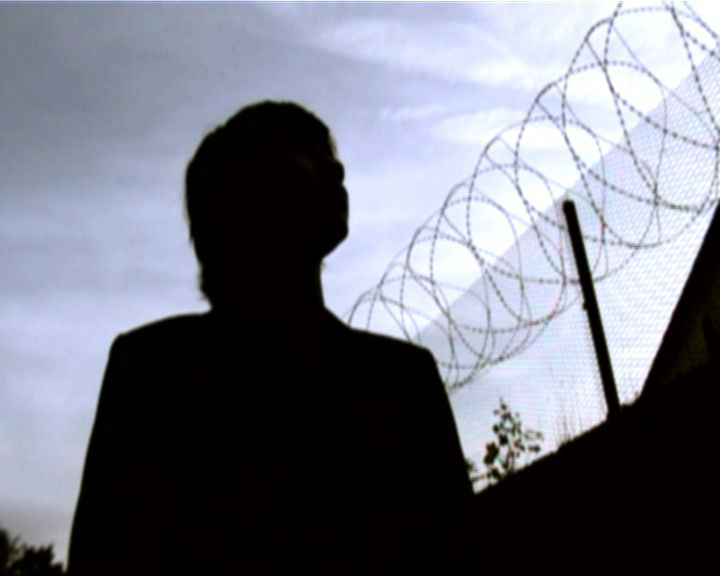
The new five channel video installation 'the Uber Memoria suite' was filmed in late October 2006 at Schwaebisch Hall, Germany. Much of the footage centred around an ex-prison used during and after the Second World War. Other depictions feature interactions in and around the town itself and the visual tensions created between overlayed 8mm film and video. A total of twelve video works make up the suite and will be displayed from 2007 onwards.

26 October 2006

The Memory Palace


Shaun Wilson, Wonderland (2004), DV as two channel DVD, colour, sound, 2 mins.


Shaun Wilson, Through Night Till Morning (2004), DV as two channel DVD, colour, sound, 2 mins.


Shaun Wilson, The Enchanted Garden (2004), DV as two channel DVD, colour, sound, 2 mins.


Shaun Wilson, Window (2004), DV as two channel DVD, colour, sound, 2 mins.


Shaun Wilson, Gathering (2004), DV as two channel DVD, colour, sound, 2 mins.


Shaun Wilson, Through My Father's Eyes (2004), DV as two channel DVD, colour, sound, 2 mins.


Shaun Wilson, Lady in the Garden (2004), DV as two channel DVD, colour, sound, 2 mins.


Shaun Wilson, Room (2004), DV as two channel DVD, colour, sound, 2 mins.


Shaun Wilson, Gathering (2004), DV as two channel DVD, colour, sound, 2 mins.


Shaun Wilson, Home (2004), DV as two channel DVD, colour, sound, 2 mins.

Video $15,000 sold as ten-part video intallation

12 September 2006

Searching for Memory in Home Movies: 1 of 3

Over the past few months, an interest into the philosophical aspects of my art practice has prompted me to make some introductory notes about the Filmic Memorials series I-VI. This extract is a modified example from my forthcoming paper at the '1st International Conference on Film and Memorialisation' and also found in Chapter 2 of my MFA thesis in progress (UNSW):

-------------------

Despite the fact that cinema can bring with it an engagement of memory through the places and characters represented by and from its subject, home movies are a unique filmic genre in the sense that, philosophically, film itself can evoke an endless flood of private glimpses into the domestic lives of family and friends.

In its heyday, from the 1940s until the mid the 1980s, 8mm film became the medium of choice for many families to document their lives through the moving image. These kinds of films are now often located in hallway cupboards, wardrobes and darkened spaces; a distant filmic reminder of old technologies from a by-gone era. In the age of digital video practice, however, 8mm home movies are perhaps at their most powerful in terms of cultural and historic value. While this is a fundamental part of how film can gain philosophical worth over time, what emerges through deeper probing exists an emotive relationship between the viewer and the image through memory: a ‘reinvented’ memory located from and within film.

The primary difference between film as home movies and film as cinema is found in the intent of both mediums. Cinema, whether narrative or non-narrative based, focused on establishing a public viewing in which the subject was available for both entertainment and scrutiny, yet home movies were private films and most certainly kept out of the public gaze. They are, first and foremost, a method that preserved glimpses of family and friends in candid moments remaining, as if locked away and within their immediate environment.

Over time, these filmic glimpses often evoke connections between the past and the present that ultimately claims ground between identity and memory. Emma Crimmings, in her essay ‘Traces’, from Remembrance and the Moving Image, suggests a connection between film and memory; not in the pictorial sense but rather in the relationships that form between the audience and film and also the re-emergence of an experience from the past brought into the present.
'Through projections in living rooms and bedrooms all over the world,
these abundant quotidian moments are harvested, processed and
preserved only when they are stored away in the dark, enclosed
places – pantries, garages, wardrobes – for eventual retrieval and
remembering in a distant future.' (Crimmings 2003, 37)
Crimming’s argument places home movies within two factors: first, committing and archiving captured moments on film and second, re-experiencing the past through the archive. Although it is clear that the first describes a methodological process, what is important to my artwork is how these records change over time to then evoke memories through experiencing a re-invention of the past through the archive.

The value of Crimming’s position reflects the personal nature, and power of, home movies when viewed with distance between what we see on film and how we can then experience such film. Western Australian film theorist Leon Marvell calls this ‘the experience of deep time’ (Marvell, 77) – the journeying back through memory arriving at a mnemonic zone, a mix between the present and the past where emotions locate themselves in transit with the moving image and of self.

These conceptual values are not unlike the French existentialist philosopher Gaston Bachelard who likens the emotions brought about through memory with revisiting, going back to, childhood as he states:
But reverie does not recount. Or at least there are reveries so deep reveries which help us descend so deeply within ourselves that they rid us of our history. They liberate us from our own name. These solitudes of today return us to the original solitudes. Those original solitudes, the childhood solitudes leave indelible marks on the soul (Bachelard, 1971, 99).
In this passage, Bachelard strips away memory and returns to childhood as the base for reverie and, moreover, the coming to terms with memory from childhood. Given that the memories I have of witnessing my families home movies are derived from childhood I now witness such footage as an adult with a distinct sensation of longing — for both people represented in the film who are no longer here and also for the places of childhood depicted in the subject that have changed or become something else —, then it would seem logical to include a Bachelardian perspective on memory, in context to childhood, in the construction and display of the artwork. For me to engage memories with my family’s footage is a merger between the poetics of sentimentality and the melancholy of loss.

Without these qualities, of emotions regenerated from memory through ‘deep time’, the artwork might succumb to blandness whereby reprojecting source footage in a gallery environment could not consolidate any greater emotional linkage or connect with the recalled narratives I am trying to convey in the artwork. However, articulating memories through film draws close proximity to that which Bachelard raises, of revisiting a location inasmuch value as I do when I witness my family’s home movies. Evidently, it becomes clear that for me to engage with these memories through the artwork I then have to use childhood as the mnemonic base to go back to in order to come to terms with the film.

My first memories of witnessing my families vast collection of Standard 8 film was in the year 1975 when, as a three year old, I recall sitting on my grandparent’s sofa, captivated by the exotic locations screened before me – Germany, Guam, Holland, and Far North Queensland. These places and others were filmed predominately by my grandfather, Tony Barbone, during his part of his time in the United States Air Force between 1956 and 1964 and also after his retirement from the Air Force between 1965 and 1986. Where Tony travelled so too did his Bolex camera resulting in hundreds of hours of footage that, as I remember it to be, created much excitement and wonder still evident in me today. Yet the ways in which I experience these films in the present, through memory, is not as I did in 1975 but rather as a point of memorialisation, of coming to terms with the loss of much loved family members who appear in the subject. Yet these emotions I feel are grafted onto the original memories I recall of 1975, coexisting as both wonder and longing. Childhood becomes a harbour to shelter the duality of memories I share with these films and, in terms of the artwork, becomes a narrative-based access point to engage with the production of my art practice.

Evidence of this is also found in French Literature as the Poet Georges Rodenbach, in XIV from The Mirror of the Native Sky (1898) describes a process of going back to childhood in order to re-experience memory in much the same way as Bachelard prescribes a zone of memory through childhood, not as a journeying back and into the past but rather as a perception of returning as a child to then articulate memory.
Gentleness of the past which one remembers
Across the mists of time
And the mists of the memory
Gentleness of seeing oneself as a child again,
In the old house of stones too black
Gentleness of recovering one’s thinner face
As a pensive child, forehead against the window paine… (Rodenbach, 63).
I reference this passage in regards to what Bachelard and Crimmings establishes and in relation to contextualising the artwork insofar as describing my relationship with the source film — as an adult remembering through a child’s memories. Moreover, what Bachelard also brings to his position is the intimate nature of memory that, in turn, opens up the possibilities of recollections evidenced in the home movies; undeniably personal and intimate. This deeply private filmic territory locks in the secrets of family histories yet at the same time provides an opportunity for the viewer to engage with someone else’s stories so often intricately crafted within the image and of the subject. Fiona Trigg, in the essay ‘Bourgeois Dictionaries / Meanwhile Somewhere…1940 – 1943’ comments:
'An outsider can easily miss the hidden stories and secret resonances buried in the visual traces left by the people who capture their lives on film. Watching other people’s home movies can be like listening to someone describing their dreams: occasionally striking but more often than not banal.' (Trigg 2003, 71)
In the historical sense, home movies were often composed by amateur film makers intended to be viewed at home with friends and families, depicting celebrations, holidays, domestic life and characteristically imbedded with imperfections: incorrect lighting, camera shake, bad cropping and irregular compositions, non-sequential editing and poor quality film stock. Nevertheless, these blemishes only enhance ‘deep time’ experiences for the viewer as if a type of time-based printmaking – mnemonic monoprints etched into each frame almost lost in real time projection. Yet once slowed down these markings come alive: a hair, a scratch, a fingerprint; future relics of other memories generated at some point after the original event was committed to film.

Moreover, these marks are to Rodenbach's concept of revisiting memory as it is to the fragments of reverie that Marcell Proust describes, in Remembrance of Things Past, by his journey back through childhood memories of eating a Madeleine. I make these comparisons to raise the idea that, like the timely residue accumulated on film, childhood memories are peppered between narratives in both authors work, randomly appearing - overlaying existing stories - only to then disappear then re-emerge at a later point in time. Such animations are evident in the way I have chosen to slow down the home movie footage where each residue slowly emerges on top of an existing frame thereby changing the original image to something else. Rodenbach does the same thing by revisiting memories that, one might argue, in effect, changes the original memory to a hybrid, animated reverie just as Proust's memory of eating the Madelaine coexists with other intertwined memories, and so forth.

This raises the question of how can the image located in home movies change by the presence of scratches or hairs while still compounding a sense of belonging to or marking a significance of filmic identity? Are these residues simply connectors between memories embedded within the artwork? No, they are not. I use these marks in the art making process as both links to other memories, as did Proust and Rodenbach through text, and also as means of anchoring the charactability of a placed character, of moving through and within place, conjured through the experience of deep time. In fact, place - not the physical locations depicted on film as such but rather an understanding or coming to terms with how these locales impact on human experience - when viewed as a conceptual structure becomes important to the artwork. Places are the written spaces that my family, captured on film, has moved through both in their memories and in my own recollections of watching these films.

Places give us, the viewer, a comparison between past and present but also a connection that can give rise to other memories, and from this, forgotten experiences that lurk within each individual frame as well as our perceptions of the subject. If these kinds of places are understood from the perspective of German philosopher Martin Heidegger, who argued that the difference between animals and humans is that animals inhabit places while humans dwell in places, then this attachment to the locations with which we experience and move through are a key factor into why such filmic locales can be important to us and that of memory.

Australian philosopher Jeff Malpas, in the essay ‘Memory, Place, and Film’, raises this idea in context to Wim Wender’s Wings of Desire (1992) by stating that:
‘Memory always places us somewhere and every memory always involves us in some sort of bodily orientation. Memory is tied to the body and so also to place. This means that memory brings body and place with it, but body and place also bring memory. Memory – and so also the sense of a past – is part of the very fabric of place. Perhaps the best example of this in Wim Wenders’ work is in his homage to Berlin, Wings of Desire. In that movie, the city is perhaps the leading character in the film – indeed the original title was Himmel über Berlin (‘Heaven over Berlin’), while Wenders himself says that ‘the city called the film into being’. It is a film, one might say, about the spirit of a city as much as it is also about the spirit of human life in that city, and it is also a film that plays with the fabric of the city as constituted in memory, in memorialisation, in the past and in the future (for memory is never only about the past).' (Malpas, 2005a)
From this perspective, Malpas distinguishes the connections between memory and place as separate from the past as "past" and in turn brings the past through place and what is recalled from such places into the present. Although Malpas is not advocating that the past is some how removed from memories evoked by film he does raise the idea of advancing the past into the present, that memory is around and within the places we inhabit. Like Wenders’ Berlin, in Wings of Desire, where the scars of the past are evident in the present, we are reminded of a city that co-exists with the echoes of its history - its interrelated past - imbedded within dwellings as perceived and experienced in the present.

In regards to home movies, they are much the same. An example can be found in witnessing a known dwelling committed to film and then making a comparison with that of the same place in the present viewed as a central character in such emotive narratives. As Malpas compares Wenders’ Berlin as a character in Wings of Desire, so too can the locations and dwellings featured in home movies become a placed character judged by its former depiction.

Characteristics of artwork I have produced in 2006 engage places depicted through my home movies as an embedded character so that much of the deconstructed film becomes part of my own identity — places cease to be locations and, in turn, phenomenologically, become part of the characters to which I engage with and through film. The danger here is to produce art that is 'about place', that is, involving artwork as a depiction of place or using place as a decorative metaphor in conjunction with something or someone else. These matters do not interest me, but what does intrigue me - in this sense - is how place can be connected within the subject so it then becomes a connection between memory, and not simply part of a memory, that navigates in and out of each frame to thus assemble film as a mnemonic beacon.

to be continued...

16 July 2006

New DVD Release


A new compilation grade and limited edition DVD will be released on August 1st of my video art produced between 2005-06. A total of 15 works are featured on the compilation version and 50 works plus bonus material on the x5 disc limited edition version. All featured examples are full length (up to 20 minutes each) in multi-region, 16:9 (widescreen) format. Included in each DVD are signed edition certificates of authenticity.

Prices are listed as:

Compilation edition (x500) $39.95 AUD
Limited edition (1/4) $5000.00; (2/4) $7000.00 (3/4) $9000.00 (4/4) $12000.00

The limited edition version is dual layered and complete with full, never released works specially made for this DVD. Bonus material includes still image gallery and interviews.

Sales can be made through this blog or email shaun.wilson at rmit.edu.au.

15 July 2006

1st International Conference on Film and Memorialisation (1)


Call for Abstracts
Due: August 2nd, 2006
Announcements: August 4th, 2006
Conference dates: October 14th-15th, 2006
Key words: Film, video, moving image, memorial, identity, place and space, architecture, loss, past, cinema,
website

The 1st International Conference on Film and Memorialisation will be staged at the University of Applied Sciences at Schwabisch Hall, Germany. 300 word abstracts are due August 2nd with notification delivered via email on August 4th. Final papers are due in September with conference proceedings delivered in October. Screenings of short films, experimental film and video art relating to conference themes will also be displayed as an alternative to formal papers.

This conference is in association with the Digital Cinema Research Group based in the School of Creative Media at RMIT University, Melbourne and is open to all thinkers including artists, curators, writers, designers, philosophers, film makers, architects, historians, and poets.

Abstracts should be emailed as word doc to: shaun.wilson@rmit.edu.au. Please type 'abstract_conference_yourname' in the subject title.

All abstracts and papers are double blind refereed.

9 July 2006

New Memory Video to be Produced in Germany

Filmic Memorials iv
Production in October 2006
Schwabisch Hall, Germany

Co-inciding with the forthcoming 1st International Conference on Memory and Memorialisation at the School of Design, University of Applied Sciences at Schwabisch Hall (Germany) I will be filming the forth installment of the ongoing 'Filmic Memorials' video art series. Unlike the previous works that were predominately reconfigurations of vintage 8mm film, the new works will be filmed on HDV and 16mm using a live action performative context.

The first resultant video will be exhibited in the future exhibition Made in Australia curated by Malcom Bywaters and John Derrick at the Academy Gallery, Launceston and the Pratt Institute, New York in 2007 while the second video will be screened at the Tasmanian Design Centre in September 2007.

The third video will be screened at Perth and Christchurch in 2008.

Production stills will be available at this blog in November.

New Video Art Screening in Spain


1st International Festival of Video Art, Valencia
24th October - 5th November, 2006
project presented by Kings ARI, Melbourne

Christopher Koller
Brendan Lee
Brie Trenerry
Shaun Wilson

I will be screening in the 1st International Festival of Video Art, Valencia, Spain along with Brendan Lee, Christopher Koller and Brie Tenerry. The selection from Australia is curated by Brendan Lee and coordinated through Kings ARI in Melbourne. For more information check the festival website closer to the screening dates and also Kings ARI website at:

http://members.iinet.net.au/~kings/video.html

(from the exhibition blurb)..
"Shaun Wilson's artwork explores the ongoing relationships between film and memory. Much of the current work deconstructs narrative-based family 8mm home movies to then reconfigure this in context to a non-narrative filmic structure. He is interested in how places and people of the past, committed to film, can then be re-staged in the present to thereby change not only what we see in the subject, on film, but also how we connect with the subject and the memories brought forward and mapped into this process. The conceptual nature of Wilson's work is as much to do with the process of capturing and preserving the subject as it is with allowing the viewer to bring with them their own reveries that engages, and from this impact on, the subject."

31 May 2006

The Manifesto of V-othic

V-othic is a video art genre derived from Gothic Romanticism.

The manifesto of V-othic prescribes works that is created with attention to one or more of the following terms:

1. Include darkened Romanticist images depicting nature, animals, and or humans
2. Explore elements of the grotesque, the poetic or that which is relating to art history/historical narrative
3. acknowledge through conceptual rationale Gothic novels/poetry from the 18th century onwards
4. convey a noir-like cinematicness

22 April 2006

New Video Art in Spanish Touring Exhibition


Presidency Government of the Canary Islands, Tenerife: March 13th-18th 2006
Museum of Contemporary Art Fenose Union: March 23rd-April 23rd 2006
Basque Museum Atrium, Vitoria: April 3rd-9th 2006
Museo Da2: April 24th-30th 2006
Parraga Centre, Murcia: May 8th-21st 2006
Bilbao Museum: Mat 23rd-June 2nd 2006
Casa Asia, Barcelona, June 2006
Centre of Contemporary Culture Barcelona : June 2006
National Museum Centre of Art Reina Sofia: October 2006

I am a participating video artist in Art Media Tech 06; a series of screenings/forums staged as a connection between international curators, museums and galleries, artists, theorists, writers, thinkers and politicians discussing various questions of digital culture. A series of selected exhibitions will be displayed at the participating venues to be then documented in a published book exploring the thematic and contextual issues related to the project.

Other artists representing Australia are Brendan Lee and Jason Nelson.

For more information go to: http://www.artechmedia.net/

29 March 2006

Charles Green on New06

"NEW06"

Charles Green
ArtForum.com
03.27.06

03.14.06-05.14.06 ACCA: Australian Center for Contemporary Art, Melbourne

“NEW06” is the latest installment in the Australian Centre for Contemporary Art’s annual exhibition of young Australian artists. It includes the Makeshift Collective’s claustrophobic, cardboard labyrinth; Giles Ryder’s versions of L.A. finish-fetish neon and plastic; Helen Johnson’s gentle frescos; Darren Sylvester’s MTV impersonations of Kate Bush and David Bowie; Shaun Wilson’s miniaturized viewing couch with home movies stuffed into a David Lynch–like cabin; Natasha Johns-Messenger’s perceptual puzzles made from ply and mirrors; and a video by Laresa Kosloff in which a large black diamond box prancing around a studio is in fact a crudely constructed, sculptural analogue of a Malevich painting with the artist’s legs poking out. The standout works are without doubt those by Wilson and Johnson, both of whom locate themselves firmly within highly traditional narrative genres—Wilson within cinema and Johnson within premodern history painting—as opposed to the extremely busy, somewhat arbitrarily juxtaposed, and more funkily phenomenological works of the other artists. Sit on Wilson’s dwarf-size couch and you see a spooky, noir, digital doctoring of family home-movie memories. Johnson’s installation featuring delicately painted scenes of everyday life, The Centre for the Study of Adhocracy: Producing Singularities in a More and More Standardised World, 2006, are as determinedly contemporary as they are overflowing with worthy slogans and antiglobalization rhetoric. They consist of a cycle of fragments from shared student life: a bedroom in a communal house, young people at a lecture, and bookcases and blackboards overflowing with words denoting the politics of ecology and globalization, like a Thomas Hirschhorn monument painted in pastel trompe l’oeil.

24 February 2006

Post-Pod: Media Beyong Mp3 - Chapter 1.2

Over the past five years, aggressive internet-driven marketing has helped accelerate the mass consumption of iPods, yet the real selling point is not the device itself but rather the process and culture of portable downloading and file sharing.

Way back in April 28th, 2003, Apple set in stone the future of internet music delivery by launching the 'iTunes Music Store' harnessing what previous on-line music distribution, through websites such as MusicNet and Rhapsody, had already established. The difference between Apple and other free or pay-based music download sites was attributed to an agreement signed between Apple and SONY BMG, Warner Bros, Universal and EMI which sought to reduce pirated and illegal music downloads by creating a pay-as-you-go internet culture at a grass roots level. Since 2003, evidence has shown that internet-user culture has experienced a reduction in illegal downloads of music and a surge in legal, pay-as-you-load consumption.

This highlights two factors: first, integrating the process of downloading as a replacement for shopping in a physical market place and second; establishing financially viable markets through global internet technologies so that new, more advanced methods of online exchange can be developed and from this, integrated into the cultural practice of e-commerce.

Within two years, over one billion songs were downloaded on the iTunes Music Store. In financial terms this is good news for Apple and its record label partners but in technological terms and, moreover, a generational shift into the growing dependancy of download culture, it establishes a dangerous position for other industries to capitalise on existing and potential mass markets.

What might be innocently conceived as a fun way to experience home entertainment could end up as the next type of weapon used to control or inflict coercion. Is it only a matter of time when terrorist groups or military forces use downloadable information through the hand held device as a front-line method of infliction? While this may be, more or less, a matter of science fiction, the fact remains that what has already been established in download market demands has to evolve somewhere and, as the way of all technology, a proportion of this has to end up as a means of destruction rather than infotainment . One only has to look at the London Tube bombings of June 2005 where the alleged terrorists used mobile phones to detonate explosives in buses and the train tunnels, to highlight the fact that simple interactive devices are potentially lethal.

Furthermore, on first glance the concept of new media device turned Hal2000 is frightening when evidenced through the current state of the world, in particular, and more close to my home, Australia, where the activities of hard line governments destabilising democratic pathways/impingement of civil liberties or in reverse, terrorist groups inflicting their onslaught against the innocent, are exposed to, via the internet, high-end computational possibilities delivered through low-end mechanics.

Likewise, new media devices have been used in activities of hate through the practice of mobile phone texting. During the Australia race riots at Crunulla in January 2006, the New South Wales police discovered that text messages sent by individuals gave specific locations and instructions to participants calling for civil unrest. The issue here, apart from the obvious question of moral judgement, gives rise to a greater lesson - that digital gizmos are not restricted to passive entertainment and communication values. One can hardly come to terms with the fact that these kinds of technologies are harmless or that the providers of such devices are simply rolling out ways to make your life more 'fun' as many IT marketing campaigns might lead you to believe. The aforementioned examples dispel this reasoning.

So the issue now is to consider such devices as a productive or creative tool designed for multi-function entertainment yet the flip side of this scenario must be acknowledged as also contributing to a menacing and dangerous position in the hands of fundamentalists: governments and terrorists alike. While I am not, however, advocating that the iPod is an evil invention it must be understood in very clear terms that the contributions of new media technologies through consumer and prosumer driven markets must be approached with caution and from this, respect ensuring that safeguards on existing technologies are not implicated in methods which extend beyong the infotainment factor and into a "destructainment" arena.

22 February 2006

Post-Pod: Media Beyond Mp3 - Chapter 1.1

When Steve Jobs first announced the release of the iPod in 2001, it was unclear just how influential Mp3 technology would be on user-end consumer markets. Within five years, the (now) phenomenon has, literally, taken hold of and, in many respects, characterised a new generation to what I call the 'i-Gen'. This is not to say Apple Computers have single-handedly morphed a generation of people into creating a lifestyle from digitally exchanged and archived music. However, the ‘myth’ of the iPod located as a fashion accessory has driven market factors to seriously reconsider the broader capabilities of this particular technology with applications that far exceed its current boundaries.

The new all-in-one video-iPods are now well circulated amongst digital communities but these are just improvements, and small advances, on a fairly old technology with limited resources. How could the hand held device evolve and would this be different from its current usage? My prediction is that the future of nano technologies will bridge a symbiotic application merging the digital and the biological together and, in doing so, will extend the iPod from media gizmo to post-human receptor.

Image a world where you could download and consume music straight into your brain? Technology so advanced that the division between digital and body are blurred. Plug yourself into an iPod and download antibiotics, or anti-aging nano-agents. Send robots into your body to rebuild hair follicles and limbs, cure acne and grow or repair internal organs, all from a wireless iPod connected to the bio-net (internet turned biological). This is where I see the future of media after the digital; reliant on the nano and its associated currencies that this will undoubtedly develop thereafter.

The major problem with a bio-nanonic iPod is the interjection between device and body. Would the body itself be genetically engineered with connecting ports - like a USB or FireWire - from which to plug such devices into? Could wireless become so advanced that the projection of nano-like robots penetrate the body through receptors, implanted as if some kind of small computer chip or even more advanced, a micro-sized internal port injected into the blood stream or tissue to circulate throughout the body indefinitely?

The ethical issues which surround such a venture are monumental. These far distant iPods could be used for measures of attack – from military hardware, state and religious terrorism, scientific exploitation, torture or coercive interference, to marketing, advertising, communication and fashion.

The future of media – an ‘after-digital’ regime – is surely in development yet throughout the next decade, advancements and investment into nano applications could bare witness to the next generation of human evolution and consumption where people are not only genetically altered but inter-connected, as if some borg-like structure, with one another. What is next for new media consumption? – the collective post-human.

REMIX(1) Authoring the Digital Remix: Images Under Strain.

Throughout 2006 I will publish a series of short discussions about 'remixing' in context to how memory, authorship and the image share an uneasy position.

------------------------------------

While it is clear that the idea of 'the remix' is not a recent invention or singular by-product of the Postmodern era and has, in fact, been represented in most facets of human communication for thousands of years, the symptoms of re-appropriation in a twenty-first century context has changed, and from this influenced the dominance of the visual image throughout new media orientated practice.

By the very nature of the digital, transference and manipulation of data occurs through linear appropriation imbedded through narrative structures - from 'A' to 'B', up and down, from here to there. To achieve a methodological process in creative fields, the establishment of images survives because of a remixing of a first image (the original) into a second image (the copy). We can see this when digital photographs are uploaded into a computer: the image becomes a copy of the original file stored from inside the cameras hardrive and transferred to its new location.

Archiving data, whether it be photographs, text or otherwise is dependant on the process of copying. The problem that exists here rests on the image itself — under strain and, to what Australian art theorist Charles Green states as 'under pressure'. Can it be that through the digital there are no original images and from this, what of the ethical dilemmas that attach themselves to a future of generational copies?

If the visual image is indeed under tension from the digital process, then any sense of ethical involvement must address two factors: authorship and deliverance. The first must objectively generate mediation with the second and the latter faces a crisis of authorship through outputting the first. If we agree that the digital process creates a version of the original through the action of ‘remixing’ then one might argue that the authorship of the copy does not necessarily relate to the authorship of the original, it is a new authorship centred on the creation of a version of something else. Moreover, has the originality of an image been superseded by the digital remix? Evidence of this can be found in the manipulation of images through software such as Photoshop giving users the option of collating one image with another to form a third image, and so forth.

Hense, digital technology can no longer be seen as portable photocopiers in filing cabinets – moving, storing and transmitting data between file to file. The strain of the image has taken hold in such a way as to become part of a generational, and accepted, way of life (can a 16 year old imagine life without Mp3 players?) where this fundamental logic is intertwined with the process of the remix: an old dog with new tricks.

(This version will feature in a forthcoming Italian publication titled Lev Manovich: 5 questions about digital culture, edited by Vito Campanelli and Danillo Capasso)

21 February 2006

Filmic Memorials i @ Australian Centre for the Moving Image


Filmic Memorials i
Memory Grid
Australian Centre for the Moving Image
until March 6th, 2006.
Free

As part of my ten year research investigation into memory and film, the Filmic Memorials project disects family 8mm home movies through spatially animated and painterly sequences captured as digital video on plasma screens (x6).

The companion work to this exhibition - focusing on 1950s footage of Europe - was screened at the Perth Institute of Contemporary Art, Perth in September last year. This installment examines Victorian centric locations captured on film and how filmic narratives are generated from such places through the intermediation of the moving image and of self.

The exhibition will be displayed until March 6th.

20 February 2006

NEW06 @ Australian Centre of Contemporary Art


Shaun Wilson 1975 (2006) video still, DV as single cahnnel DVD, colour, sound, 120 mins.

NEW06
Curated by Juliana Enberg
March 14 - May 14, 2006
Australian Centre for Contemporary Art
http://www.accaonline.org.au/NEW06

Helen Johnson
Makeshift
Laressa Kosloff
Natasha Johns-Messenger
Darren Sylvester
Giles Ryder
Shaun Wilson

ACCA's prestigious annual showcase of recent commisions by young Australian artists of national significance will this year feature video, installation, painting, sound and sculpture. Since Melbourne's once hotter-than-hot art prize The Moet Chandon Touring Prize went to curators heaven there has been a lack of Melbourne orientated block-buster exhibitions focusing on cutting edge experimental art — with one exception being the major survey show '2004' that ran concurrently at the NGV and ACMI in 2004.

Thankfully ACCA had the foresight to carry on a program in the spirit of the Moet Prize that has, give or take a few artwork flops, once again put the zing back into public galleries. This is not to discredit the outstanding track record of other galleries such as what Gertrude Street, Westspace, Platform etc and now Kings ARI have given us over the past decade or so, however in terms of major survey shows at top shelf venues the NEW series really takes the cake. If ACCA can maintain a long term perspective on NEW by keeping to the current formula of 6-7 artist commissions then what a superb time capsule of artistic meat and three vegs we will have in years to come. Like Malcom Bywater's art time capsules, the monumental 'Artline' 30 year-long exhibition series, NEW has the potential to present a moment in time, a reflection of a generation and, moreover, a reflection of the society with which such a generation was reared, to be well preserved for future viewers.

It is also worth noting that if this years show can uphold what the others have already established then NEW07 has a lot to live up to - perhaps we might see the likes of UN Magazine's editor Lily Hibberd exhibit her film star paint tins or Brendan Lee screen what is arguably the most nationally significant example of political video art around today, True Blue (where are the Crunulla inspired, or was that horrified, artworks on public display?) or even a good juicy Juan Ford painting ready for conceptual harvest.

What ever this years current artists establish, it is sure to be an interesting exhibition with the likes of Helen Johnson, Makeshift, Laresa Kosloff, Natasha Johns-Messenger, Darren Sylvester, Giles Ryder and Shaun Wilson. As for what I'm doing, well you'll have to come along and see for yourself but think home movies at 3% then you might have some idea.

ebook: Post-Pod: Media Beyond Mp3.

Throughout 2006 I will publish extracts from my ebook Post-Pod: Media after Mp3. You can read a teaser in the project and forthcoming Italian publication Lev Manovich: 5 questions about digital culture [http://www.thenetobserver.net/levmanovich/].

Post-Pod disects what will replace Mp3 technologies from existing media distributions by exploring how nano technology and what I term the 'bio-net' (biological internet) will interconnect and impact on our ways of communicating, terms of identity malfunction, privacy reconditioning and place making. The arguments raised throughout disperse sentiments that Mp3 technologies are simply for recreation and delve into how their distant future cousins will become far more sinistair and interventionalist - nanoterrorism, DNA corruption, computer consciousness and biological/technological mergers.

A full copy of the ebook will be available for sale later this year for $29.95 AUD as a first edition of 20,000 copies.

17 January 2006

Uber Memoria Proto

[shaunwilson_still3_uber2.jpg]
Shaun Wilson, video still from Uber memoria proto (2007), HDV as multi channel DVD, colour, sound, 25 mins.

[shaunwilson_uberproto2.jpg]
Shaun Wilson, video still from Uber memoria proto (2007), HDV as multi channel DVD, colour, sound, 25 mins.

[ShaunWilson_proto3.jpg]
Shaun Wilson, video still from Uber memoria proto (2007), HDV as multi channel DVD, colour, sound, 25 mins.

[ShaunWilson_proto4.jpg]
Shaun Wilson, video still from Uber memoria proto (2007), HDV as multi channel DVD, colour, sound, 25 mins.